
2026 Reunion Luncheon
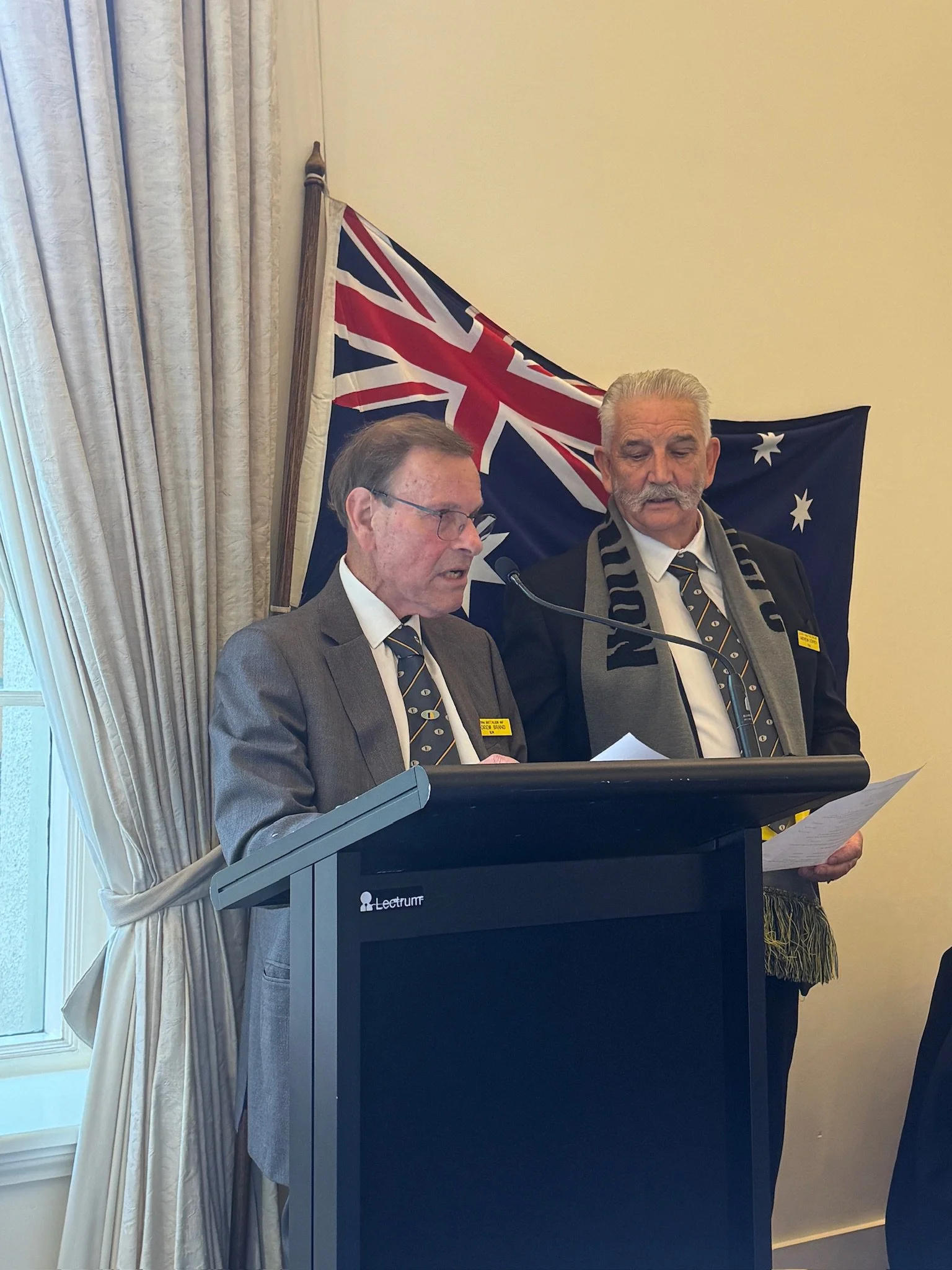
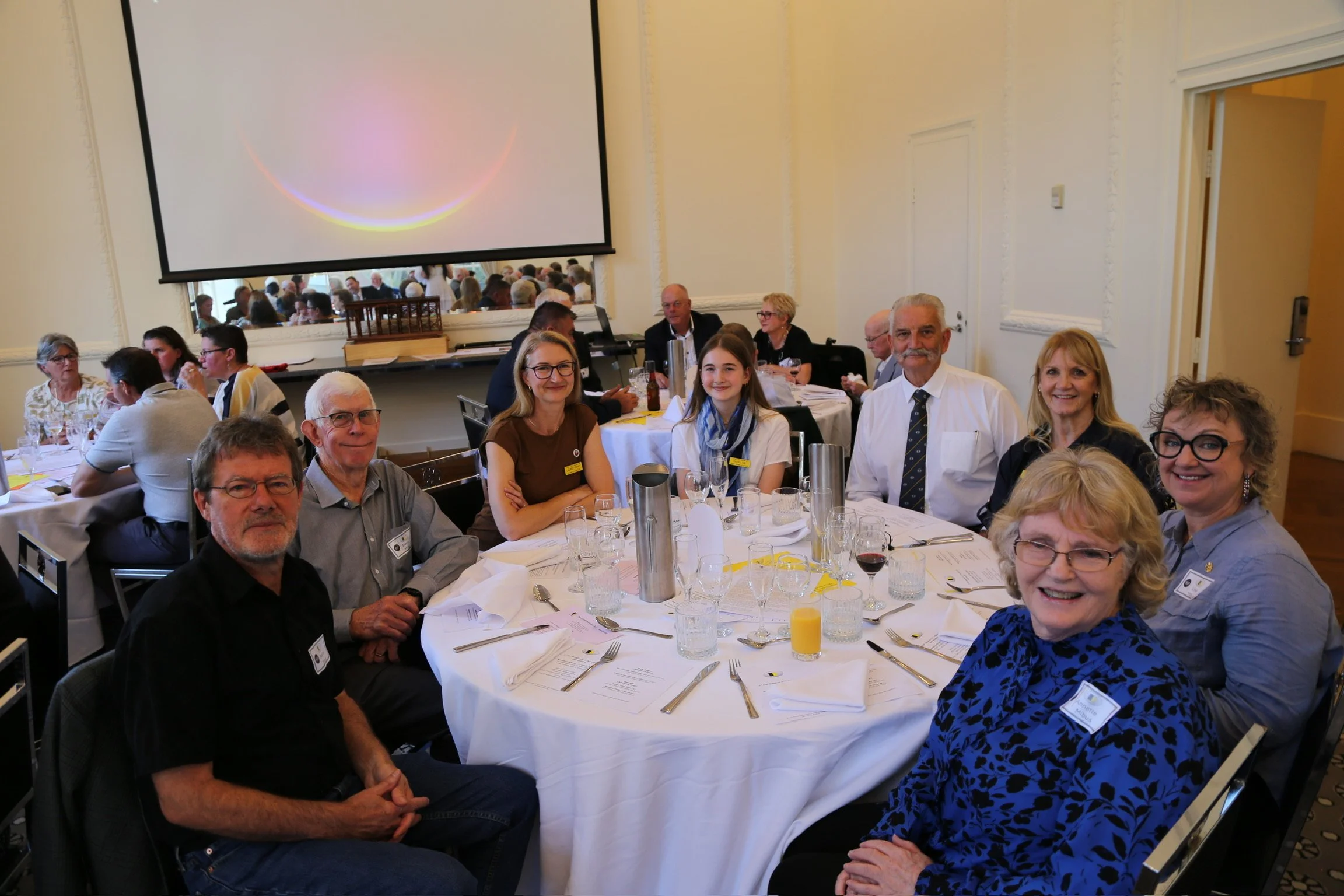
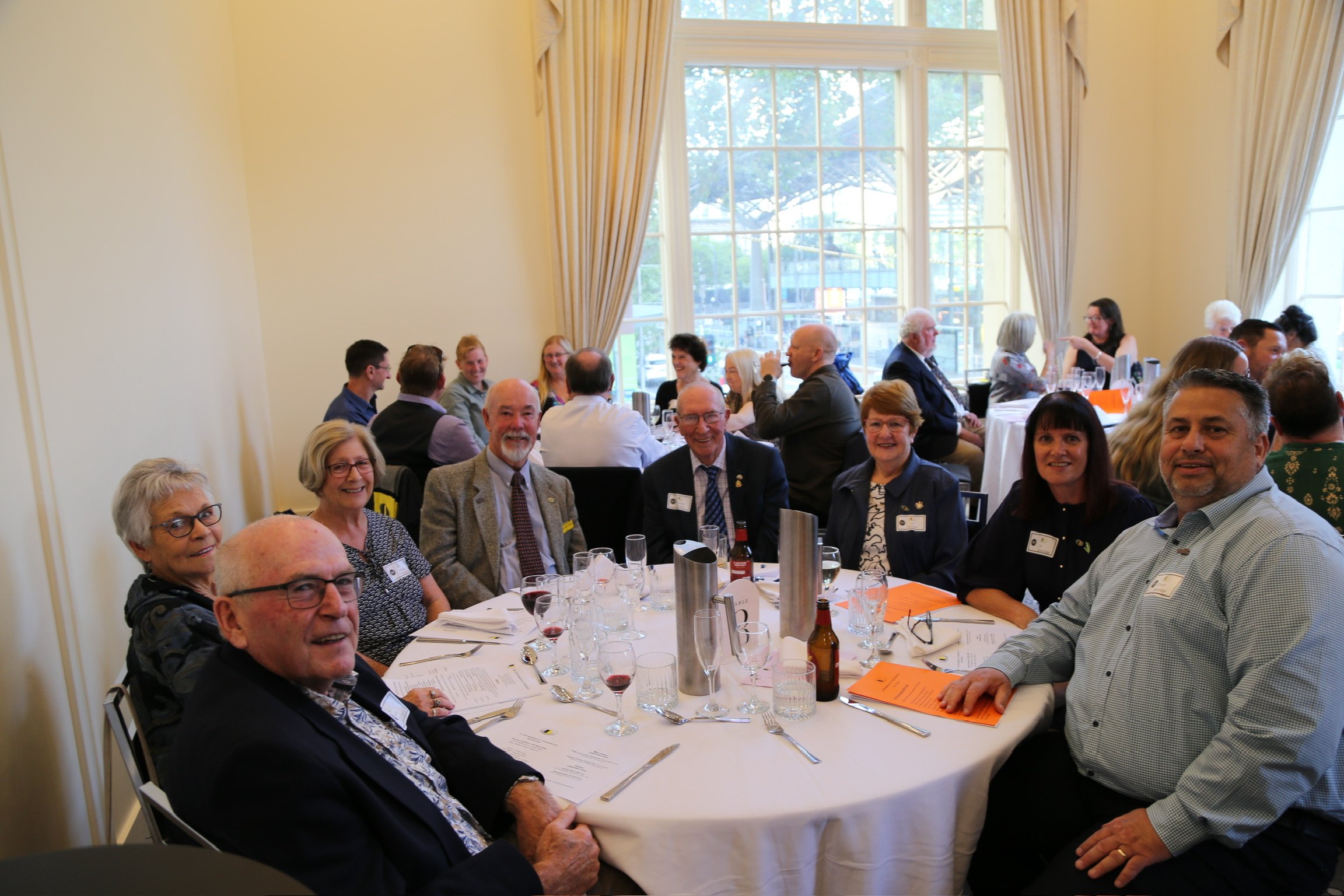
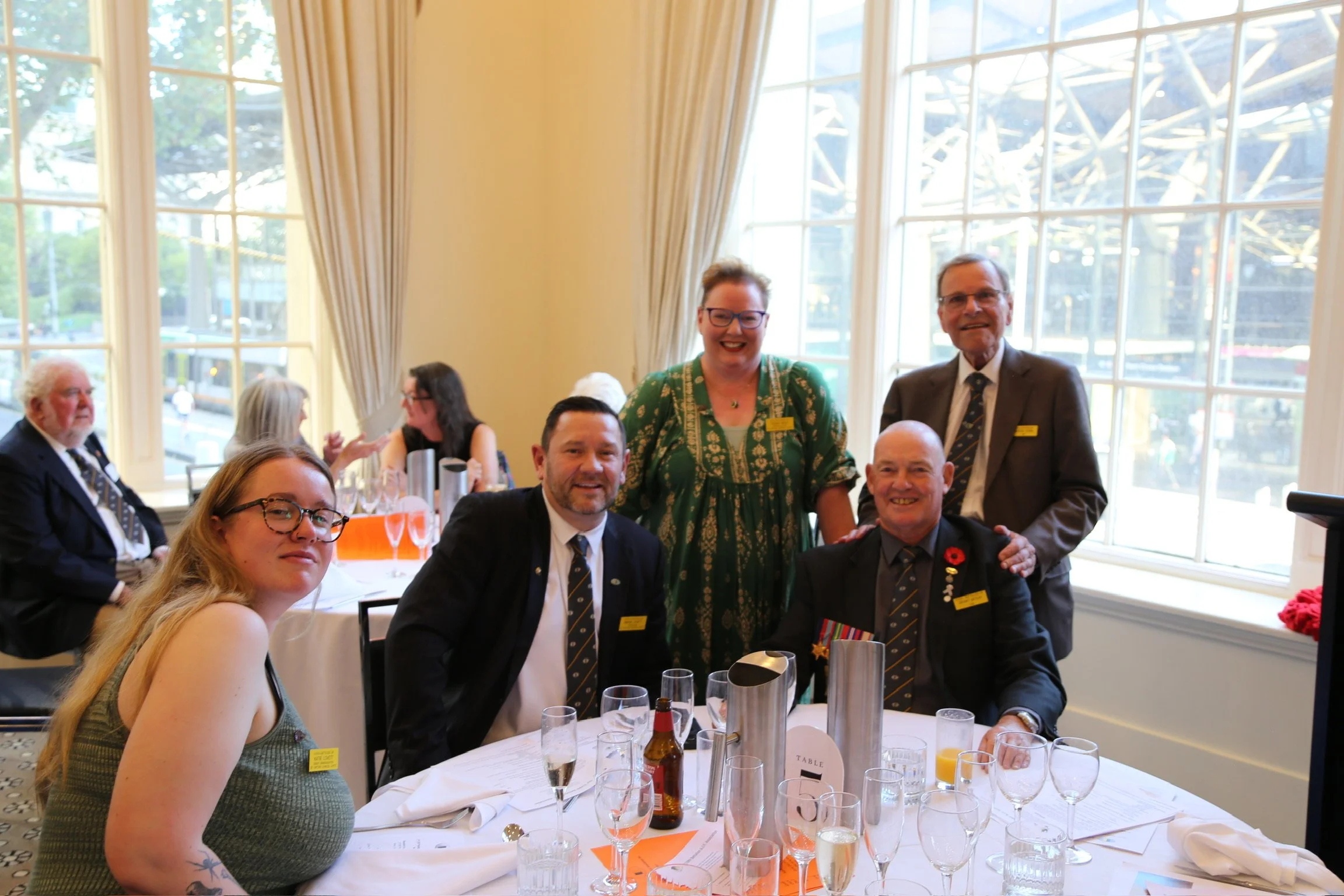
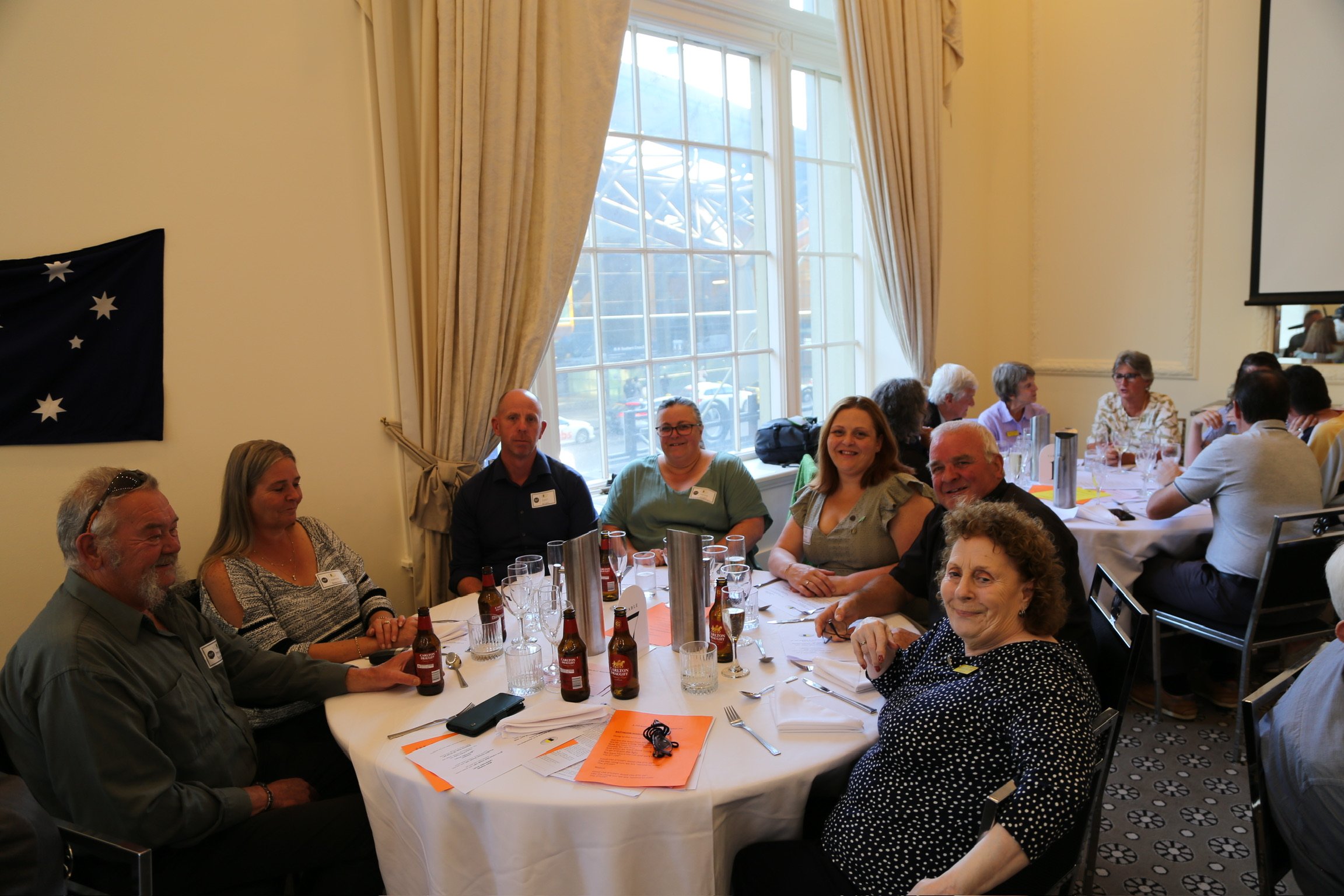
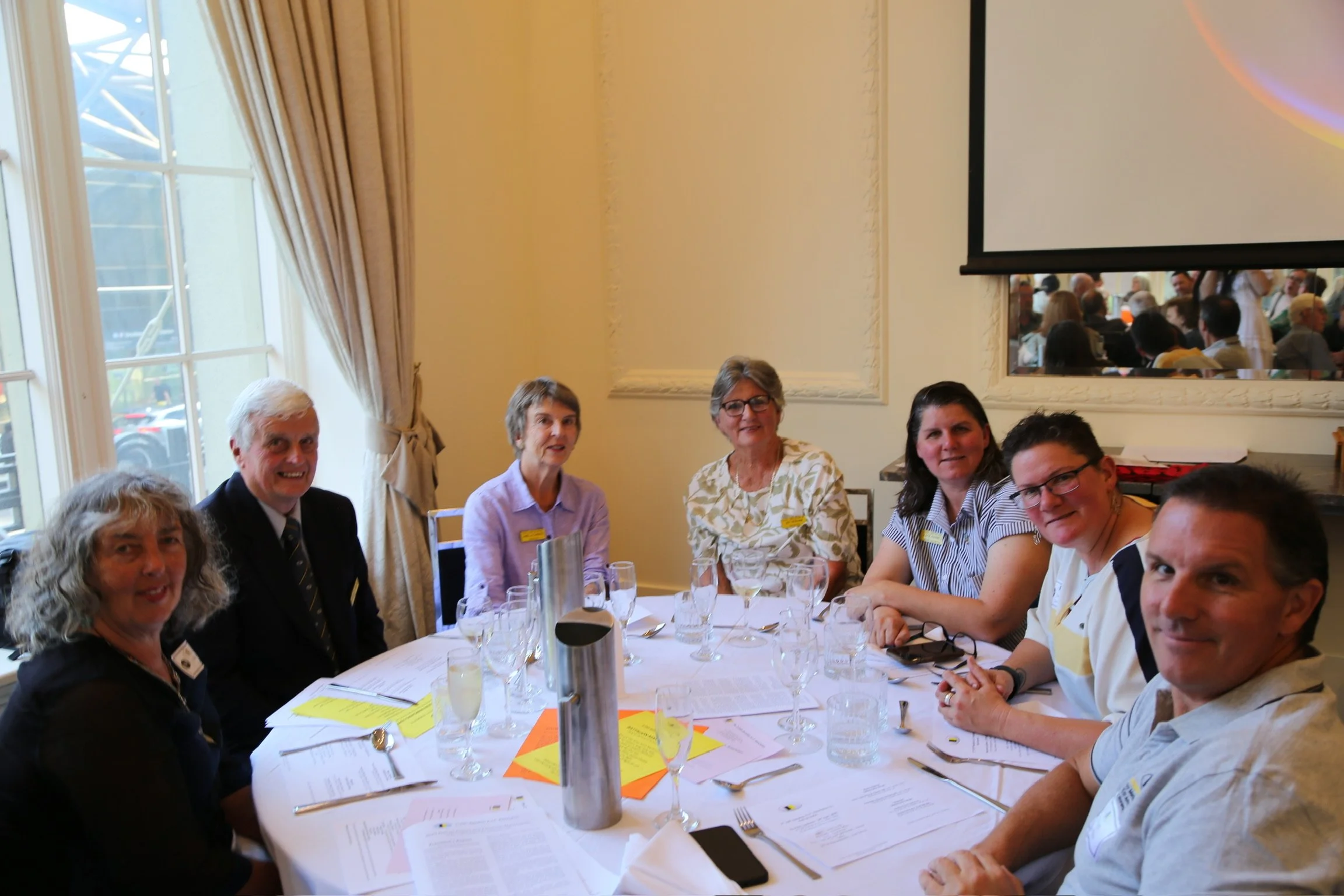
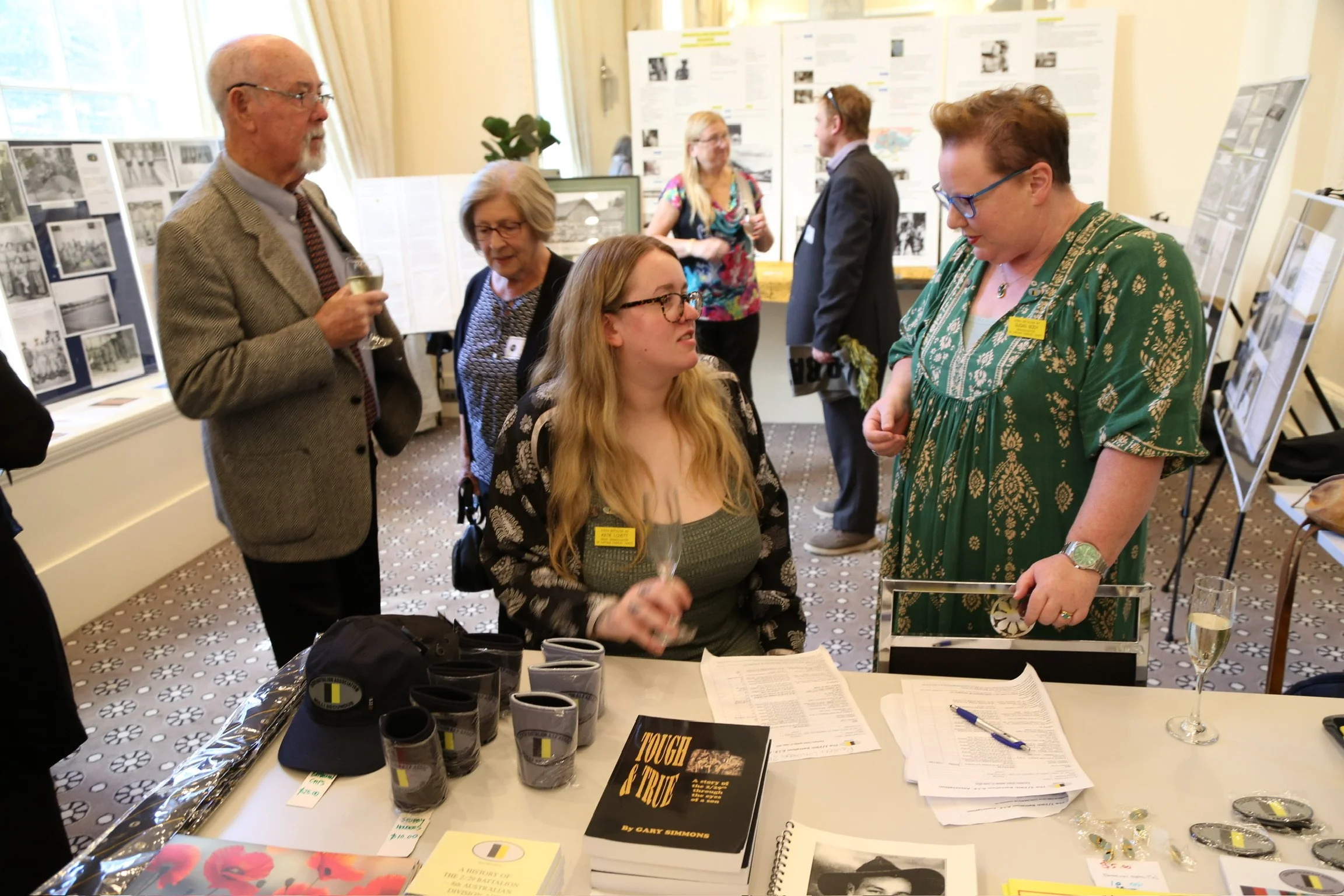
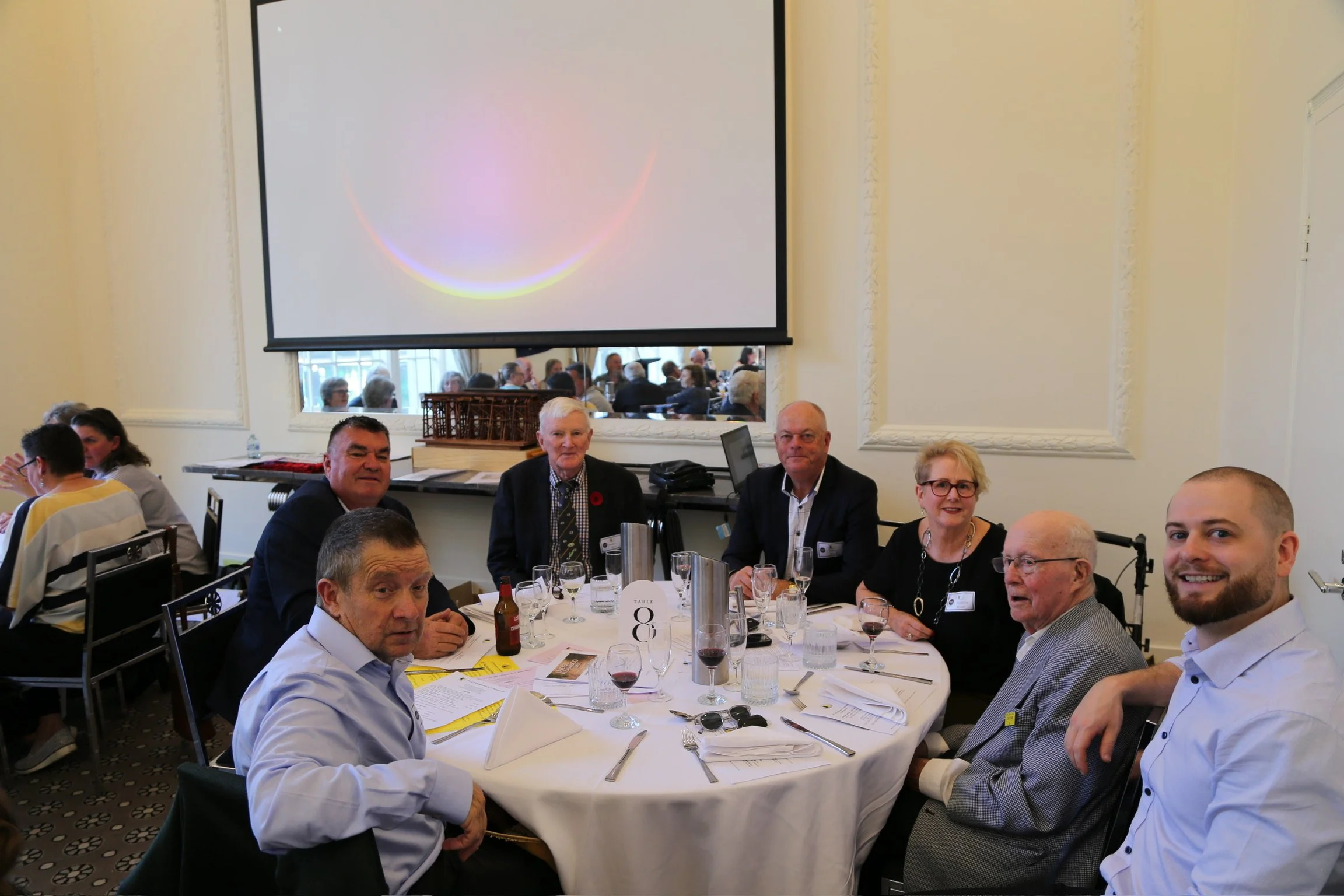
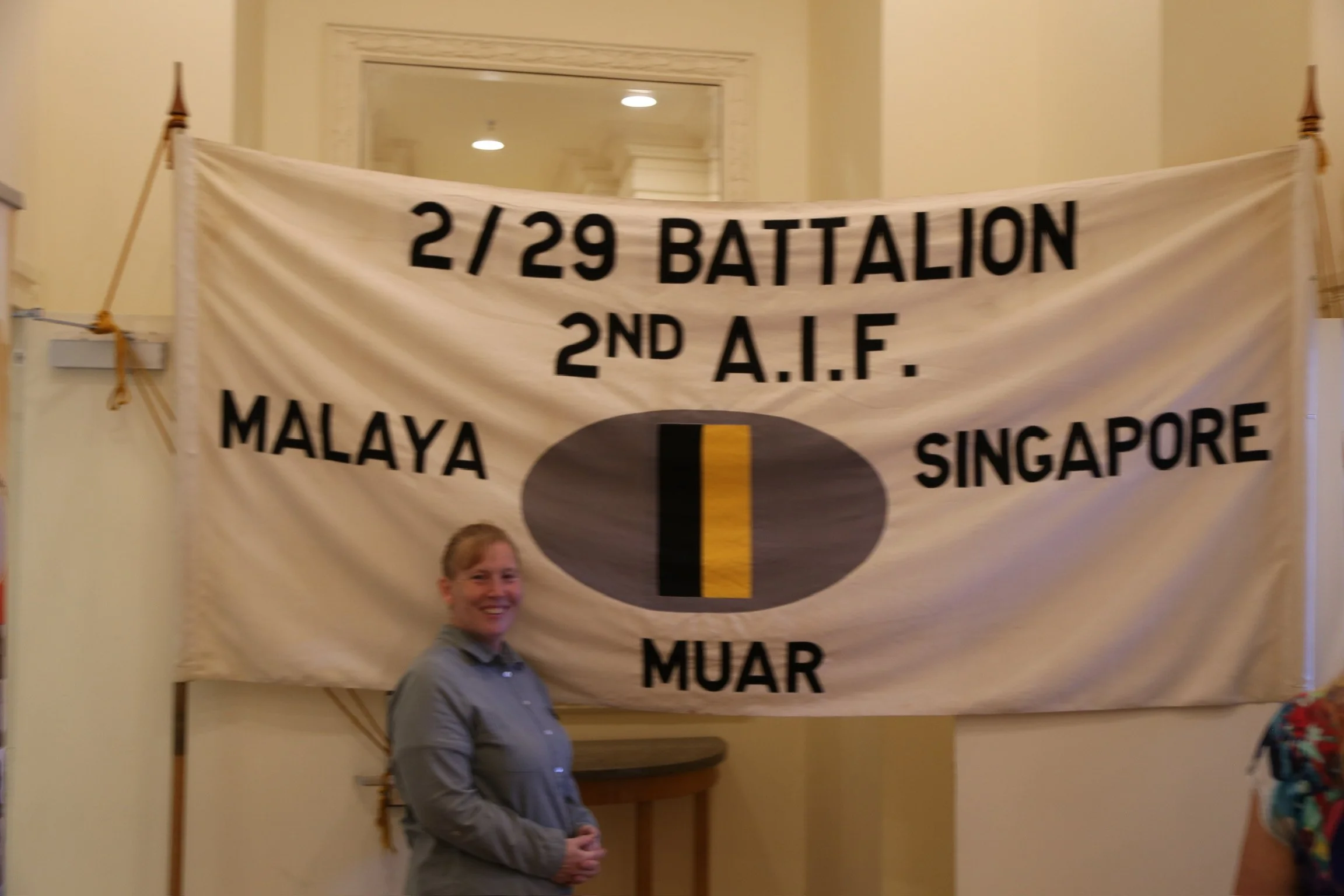
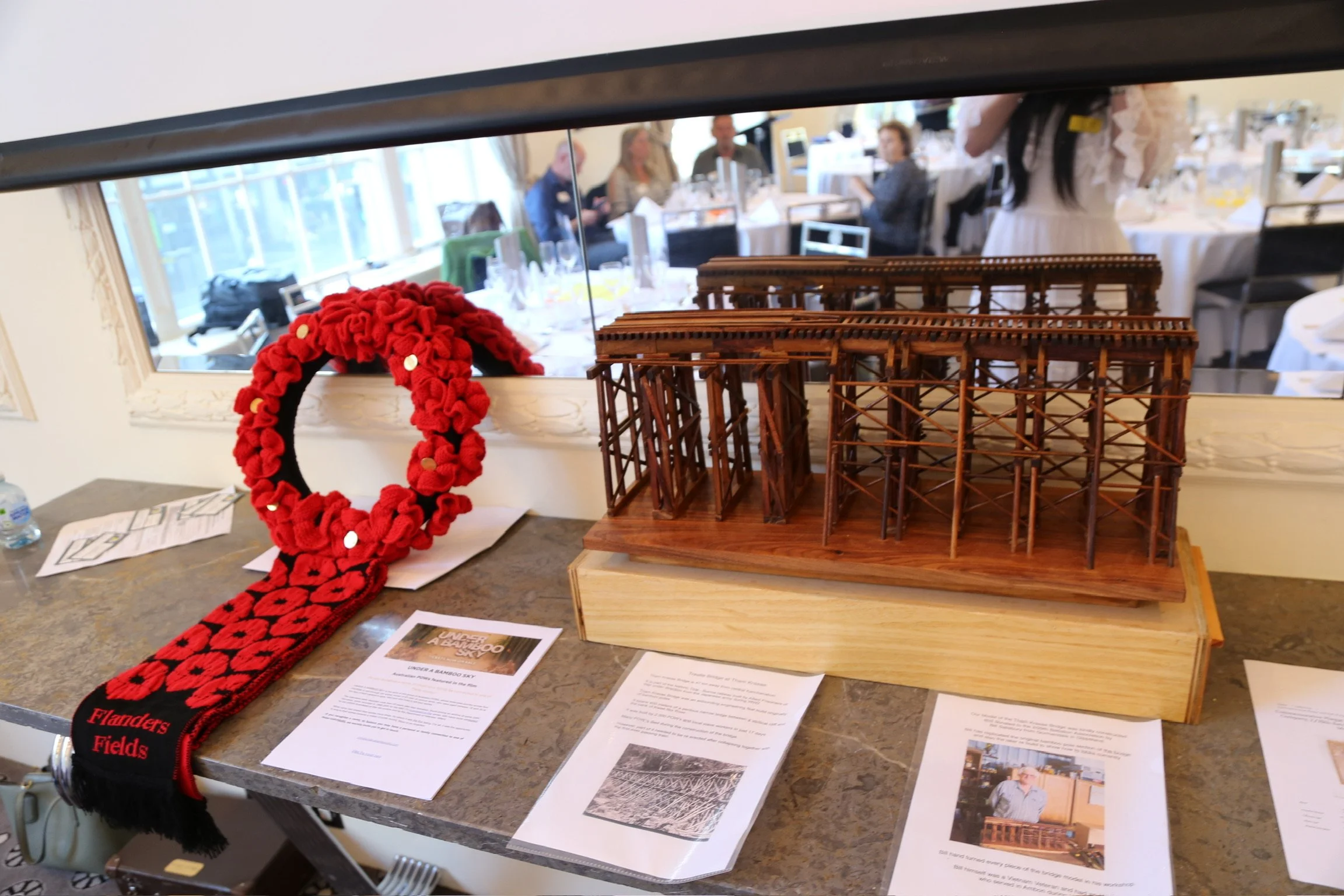
Our Reunion Luncheon once again followed the AGM on 24 April at the Savoy Hotel. More than 55 members and friends of the Association attending the luncheon.
The success of the day would not be possible without the support of our members. Thank you to Janine and Peter for transporting and organising the memorabilia and displays, and, as always, the Lovett’s for the making available our range of merchandise.
And a heartfelt thanks for the generosity shown to the Vague family at this difficult time.
At the luncheon we had the pleasure of announcing that Eliza Lane, great granddaughter of Jack Coffey, as the Educational Grant recipient for 2026-2027. Eliza’s successful submission is in this newsletter.
We also had the pleasure of Laura Patterson providing an address to the attendees. Laura was involved in interviewing men of the battalion for No Lost Battalion. Laura reconnected with the Association at last year’s the Boys from the Bush service in Bendigo, and was happy to provide a reflection of her time as a history student undertaking interviews for the book.
Laura’s address follows:
----------------
This is a really true story.
And like most true stories, it doesn’t move in a straight line. It has facets and faces… in fact, true stories are just like diamonds you can never quite figure out if you’re looking at them or through them.
This true story gathers meaning as it goes.
It’s a tardis of a thing – something that looks like a clean set of factoids, but opens up into a labyrinth.
It is made of tellings, and of what lies just behind the telling.
Many of you will know the feeling – the sense of double meaning. The quietness in the corner of a rowdy celebration.
It tells of pain and despair, yes —but also, of resolve, irrepressibility, unexpected joy.
It returns to itself. Turns in on itself, challenges, changes and contradicts itself.
It demands to be told, but just as often, it begs for silence.
It is a story as old as time, as close as tomorrow, and happening today.
It’s alive.
This oral history forms at first around boys. Australians, some barely 14. Too young yet for wisdom teeth.
Boys from Melbourne. Boys from small towns whose names have slipped to the edge of our shared memory.
Small towns with memorial plaques and plinths. Bigger towns like mine… where I happened last year upon the 2/29th Battalion Association commemoration at the Sandakan sculpture in Bendigo.
My mother in law was singing at the commemoration with her choir, which is why I was there, but I recognised Andrew Coffey in a heartbeat and thought “this is the universe at work.”
That’s how, 21 years after the publication of this book, I ended up here, talking to you.
But back to the boys.
They trained together, travelled together, and found themselves, far from home, as part of the 2/29th 8th Division AIF. Nulli Secundus.
And then, as history would have it, they were overtaken by events larger than themselves.
The surrender of Singapore, on the 15th of February 1942—what Winston Churchill would call the worst disaster in British military history—was not just a military turning point.
It was something even more enduring. A radical shift in understanding. A loosening of old certainties. An unravelling of strings.
For some of these men, a sense of betrayal.
The uneasy shaping of an identity that was no longer inherited by accident of birth, but built, year upon surviving year, with consideration and with intent.
What followed the surrender was death and years of captivity. Years of it.
But if we linger there, in the facts, we miss the essential.
Dates, proclamations and lists… and bible leaves rolled for cigarettes, scrounging and whispers, blades made from sardine tins… and the easiest, most problematic word in the Australian lingo – mateship.
When we began this work, I was not an expert.
And it still seems an unlikely arrangement—that I could be trusted with the oral histories of men who had lived through such things.
That they would open their doors to us, and allow us to sit with them, to listen. But they did.
And so the work began. Briefed, warned, rallied and dared to be Lack’s Apprentices, our History Class sallied forth.
It was 1999. We carried tape recorders—heavy things, slung in canvas. This was before anything could be made light or invisible.
None of us knew our heart rate or. The. Way. To. anywhere. We didn’t even carry water!
The weight of the equipment felt appropriate for the task … as we shored up, a bit dishevelled at addresses written on post-it notes.
We knocked on doors, welcomed by old men who had been waiting. Into good rooms. Kitchens. Vegetable gardens. Sheds.
We walked with them in parks, and along ordinary suburban streets—streets that gave no outward sign of the histories they harboured.
And slowly, carefully, the stories emerged.
Without pretence or performance. As offerings.
Often over cakes and tea. Sometimes with shaking hands. It did dawn on me at the time that I was never going to be the same after this. Turns out after everything those blokes did for us, it was a very small trade.
And there WERE those who guided us.
Prof Lack who insisted on the human scale of history and Peter Hosford who shaped our early attempts with a kind of restraint I have come to admire even more with time.
But our real work was done in those rooms, in the presence of the men themselves.
I remember one in particular.
Don McArdle.
A rose-growing man. A man who married a woman called Joyce, which seems, even now, a wonderful kind of miracle.
He spoke to me about beri-beri. About sharpened spoons. About the economies of survival that shape up in places where survival is not guaranteed.
He was a calm man.
The kind of calm that is not lived lightly.
At the end of one interview, he drove me to the train. He said, “Laura, I wish you a long and happy life.”
I had made him cry, earlier, with questions that were too direct, too unformed.
And still, he met that with grace.
It is difficult to describe what that kind of generosity asks of you, once it has been given.
I have certainly never forgotten it.
I try to pay it forward.
Over time, in crafting and in Oral History, patterns begin to form.
Threads come together as chords.
If I were to name them—and I have tried, over the years—they would be these:
(Heart) Respect.
(Head)Relevance.
(Hands) Reverence.
Ways, as oral historians, of being in the presence of other people’s lives.
Respect begins, quite simply, with listening.
Though, listening is not as simple as it sounds.
You have to be willing to set aside your question, in favour of the answer you are given.
It requires attention to what is said—and to what is not said.
There were moments in interviews where a man would stop, mid-sentence. Where something in the telling reached its very edge.
Respect is knowing that you are to be led through the jungle.
That sometimes, you trust that what has already been entrusted to you is enough.
These men were not recounting their experiences for affect. There were few grand, sweeping tales.
They were offering fragments.
And fragments, like porcelain, require care.
Relevance is something quieter.
There is always the question: why does this matter now?
And the answer is rarely found in the large movements of history.
It is found in the small, repeated acts that made endurance possible.
“You didn’t look ahead. You looked sideways.”
Phrases like that speak to something beyond that time and place.
In conditions designed to isolate, they remained, as much as they could, with one another. They shared. They argued. They forgave. They constructed, from almost nothing, a kind of community that kind of held. That holds.
If relevance has a line, perhaps it is that.
Not forward, not back—but sideways.
Reverence is more difficult.
Because it asks something of the present.
It asks that we resist the urge to make these stories easier than they are.
It’s tempting to turn suffering into salve. To shape it into something that resolves cleanly, that reflects well on us as inheritors of it.
Reverence resists that and allows for discomfort.
It allows for the fact that not all men returned. That not all experiences can be spoken. That some who did return found themselves -still- at a distance from the world they had come back to.
Reverence also asks for accuracy.
For the acknowledgement that what happened was not inevitable. That decisions were made, and misjudgements carried consequences. That the underestimation of Japanese forces, among other failures, shaped what followed in very real ways.
To hold all of that, without smoothing it over—that is part of the work. We must maintain the humanity of our martyrs.
Because there is a tendency, over time, to cast such figures in bronze.
To place them, quite literally, on pedestals.
My grandmother Mabel Dowling Taylor, a physiotherapist, studied anatomy at the University of Melbourne alongside Sir Ernest Edward 'Weary' Dunlop, a doctor.
She was later in life awarded an OAM, partly because of her care for children with Polio in Ballarat in the late 1930s.
He, as you know, spent his life in the service of and care for countless people, including during his own time as a POW after the surrender of Singapore.
Knighted, Weary now stands, still, near the Shrine of Remembrance.
And there is a place for such recognition.
But before the awards and the bronze, lives were being lived.
Decisions made under pressure. Acts of care that were never mentioned in dispatches. Ordinary people, carrying as much as they could.
It’s no exaggeration to say that these men of the 2/29th, and their families, and you - helped build the country we now joyfully inhabit.
A tradition continued.
Now. Here. Today.
The book that came from this work, No Lost Battalion, was named with care.
Men were lost.
Many.
But the battalion itself—the memory of it, the voices, the record—remain.
Because Oral History is a democratising discipline, it gives people another opportunity – perhaps even their first – to speak in their own way of the events that shaped their lives, and the Australian nation.
And so we return to something very simple.
A question asked nearly 30 years ago.
“What do you remember most?
Not the worst. Not the beginning, or the end.”
Silence.
And then, “We kept going.”
Steadfast.
Dedication without embellishment.
And that is where these three threads bond.
(Heart) Respect, in hearing it as it is given.
(Head) Relevance, in recognising what it offers.
(Hands) Reverence, in carrying it forward undistorted.
This is a really true story, any way you dice it.
It has been told, and retold. It has been held in memory, and in silence.
Today, and for tomorrow, ANZAC Day 2026, we remember this.
And we will always remember them.
----------------