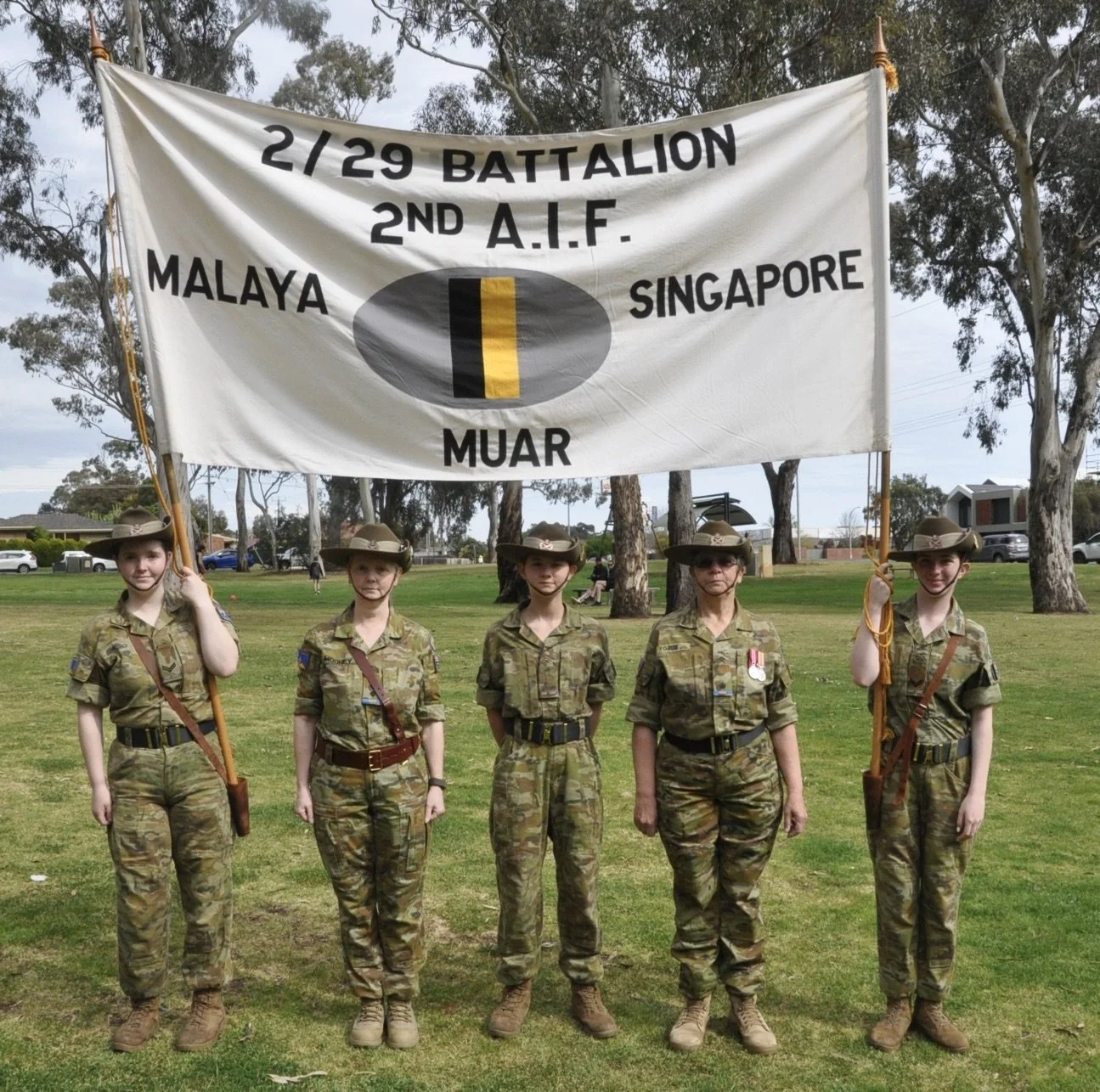
2/29th Bendigo Memorial Service, Sandakan Memorial Strathdale
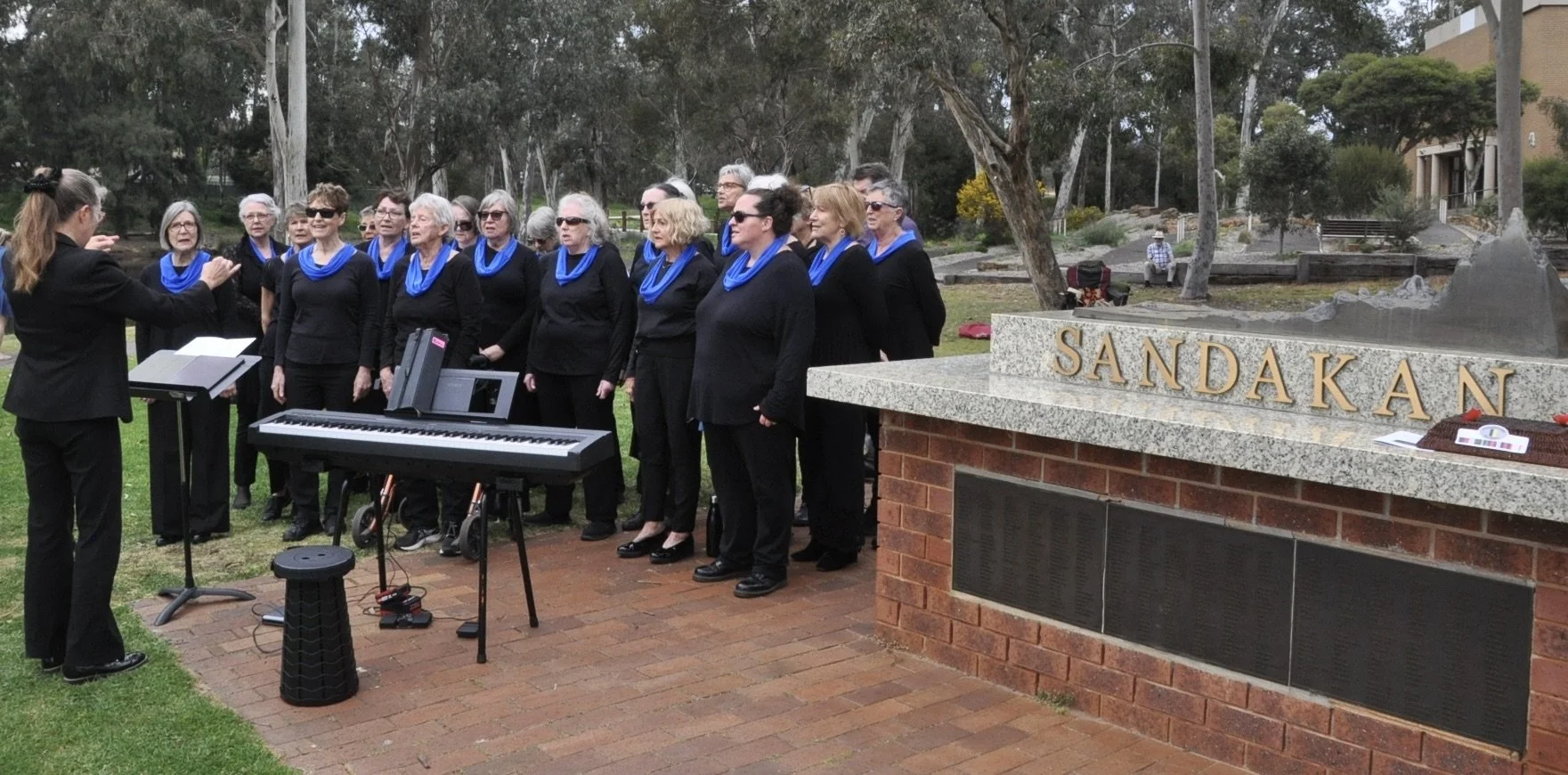
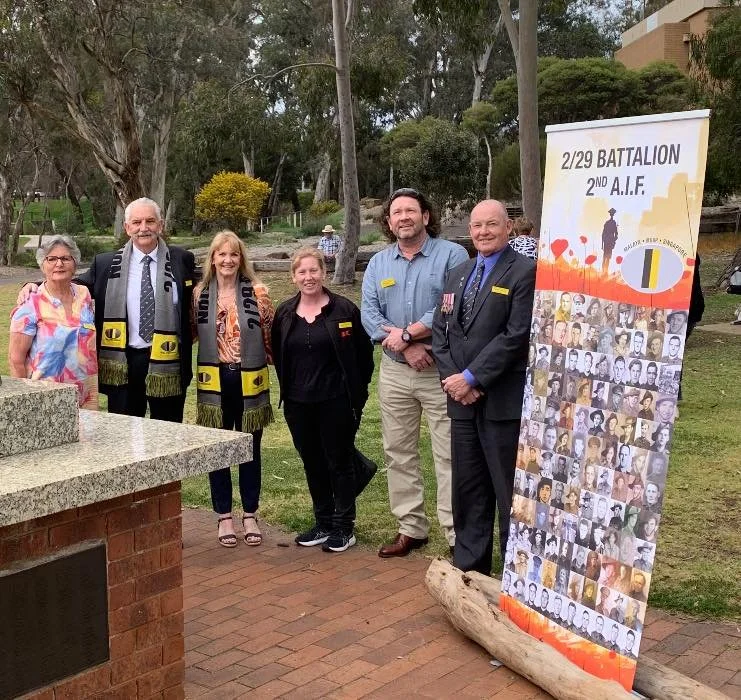
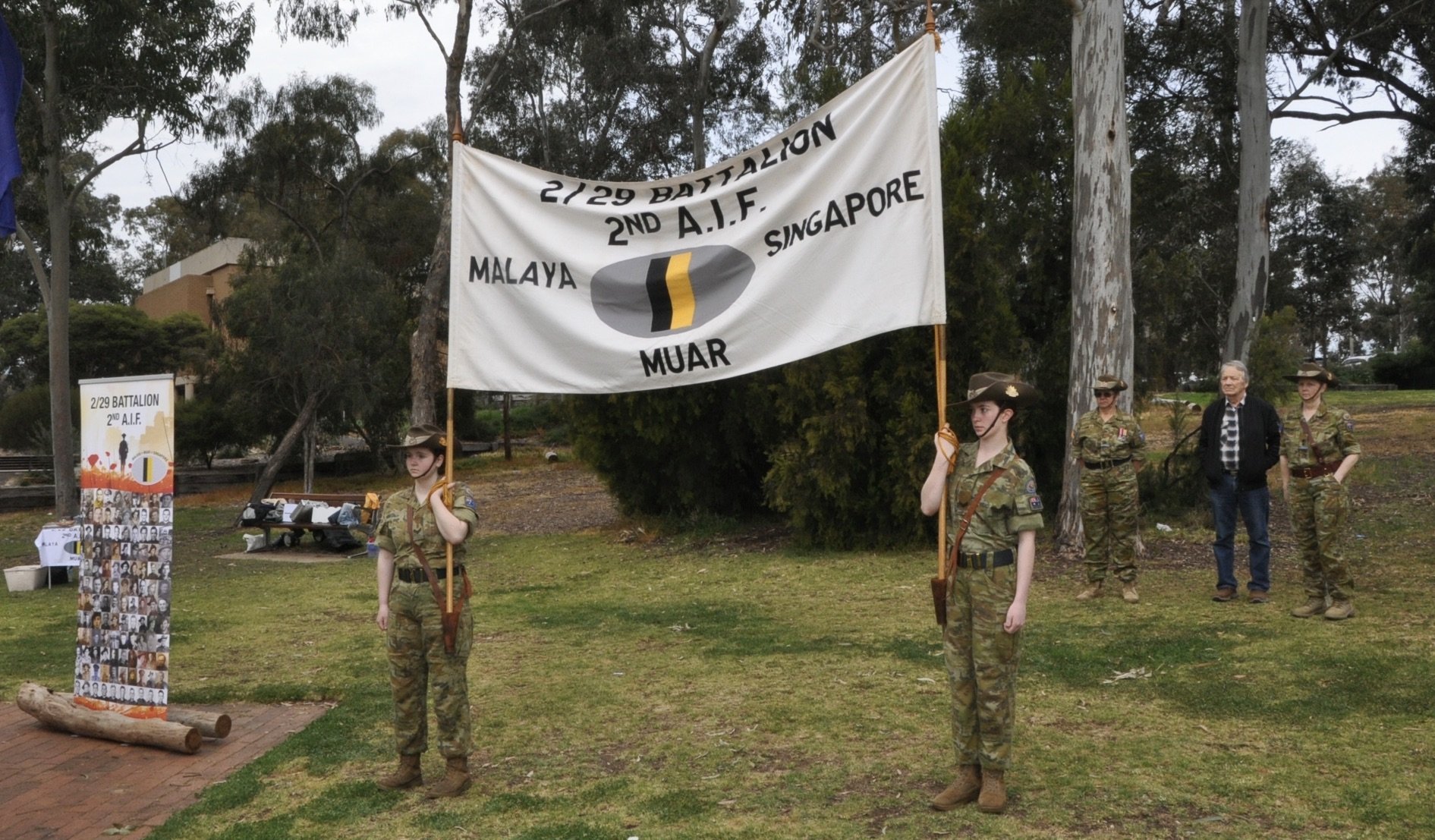
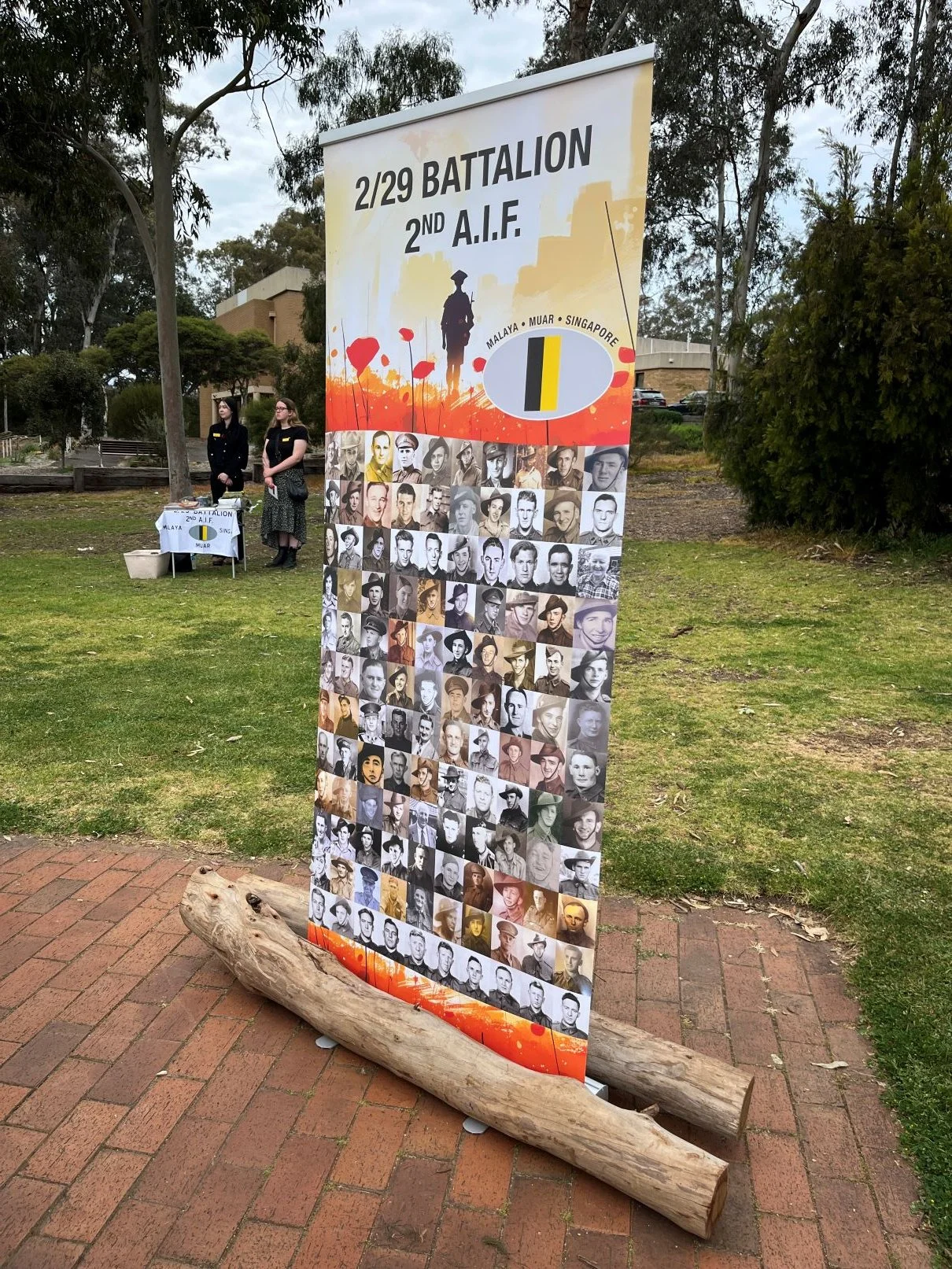
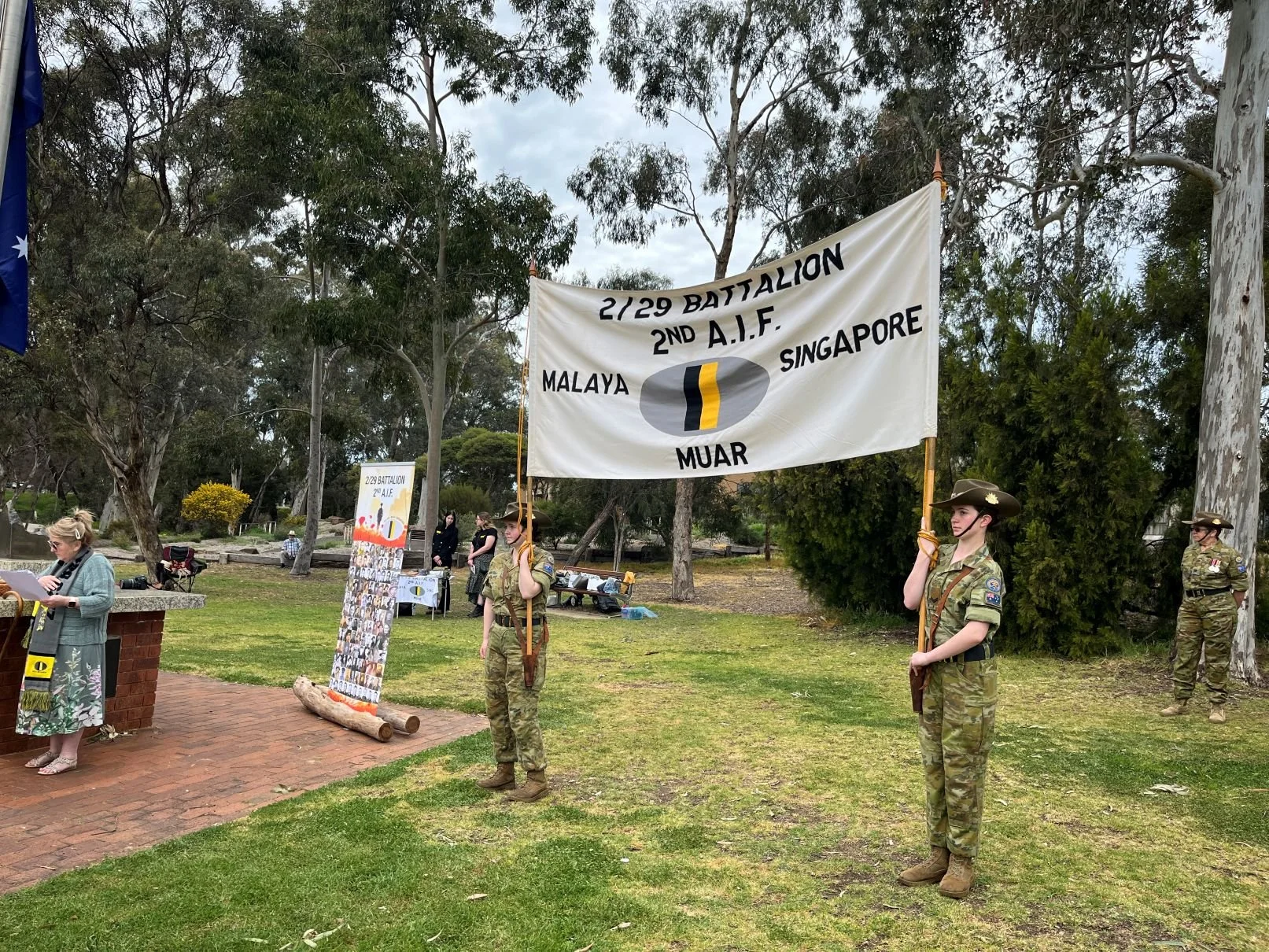
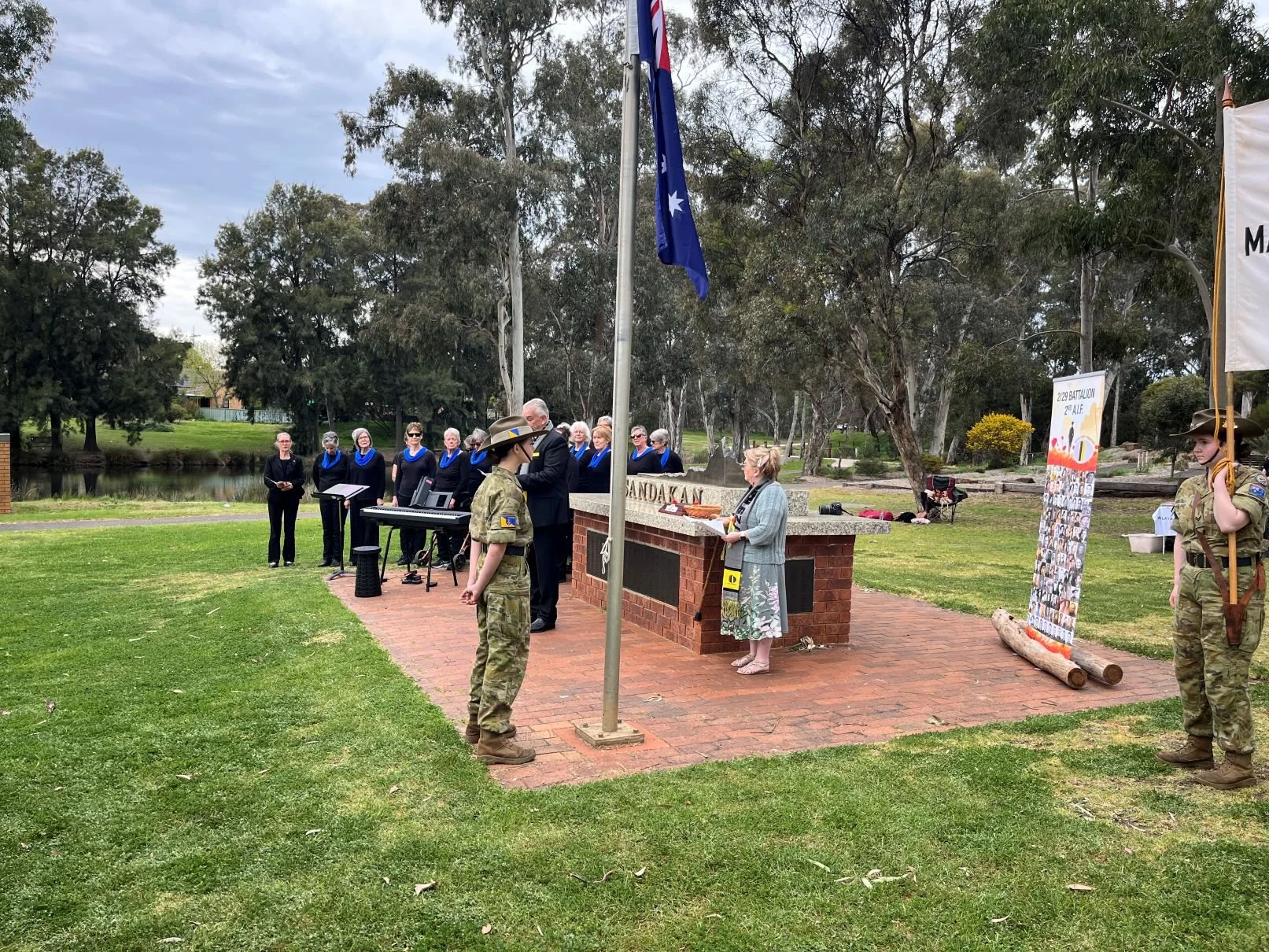
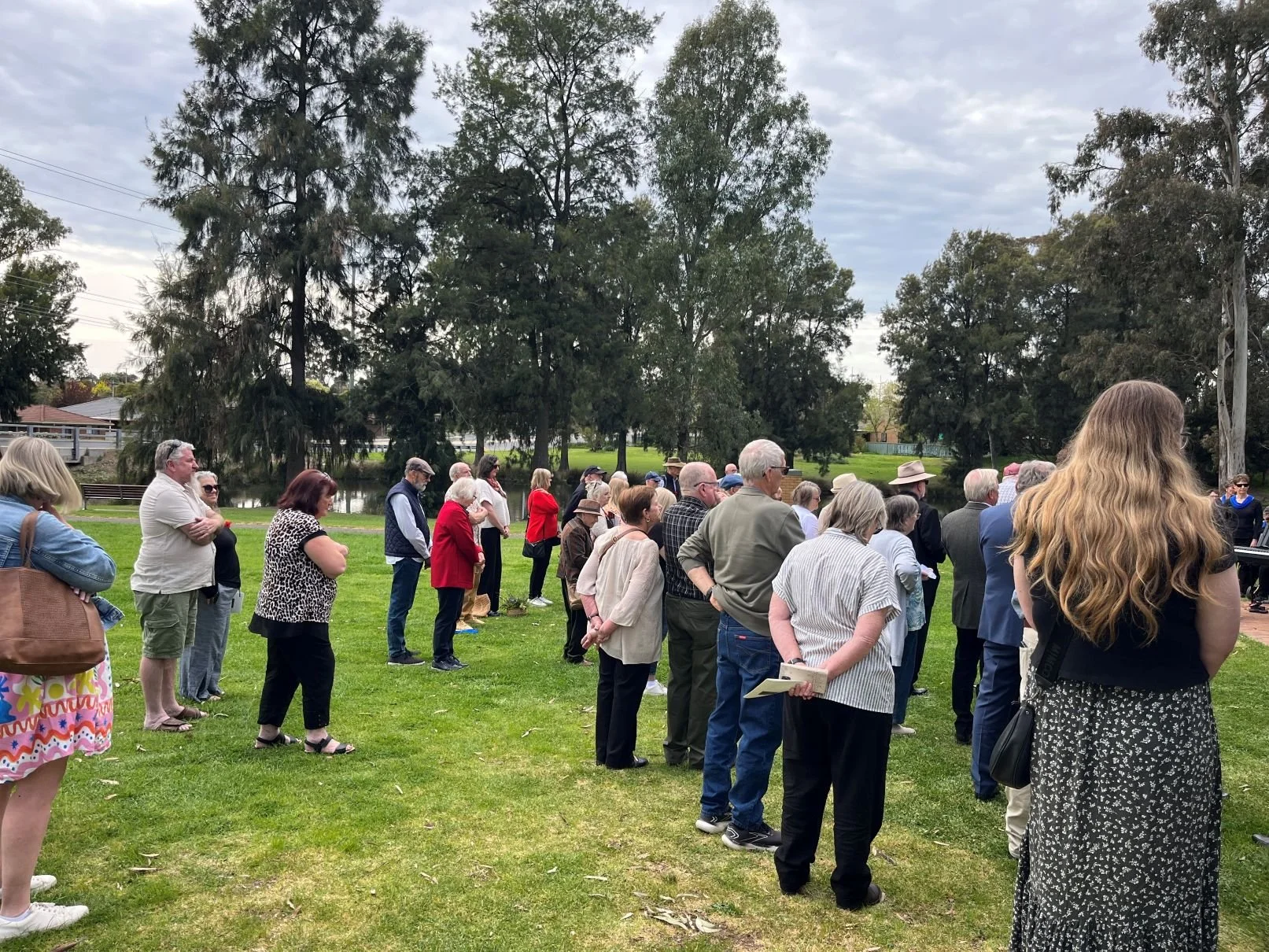
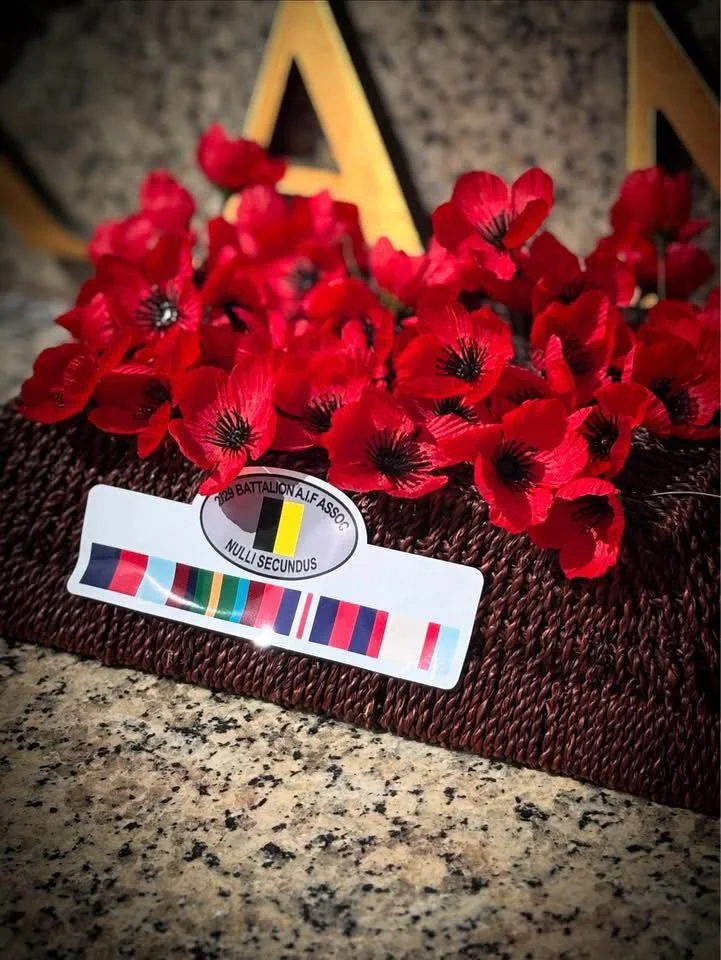
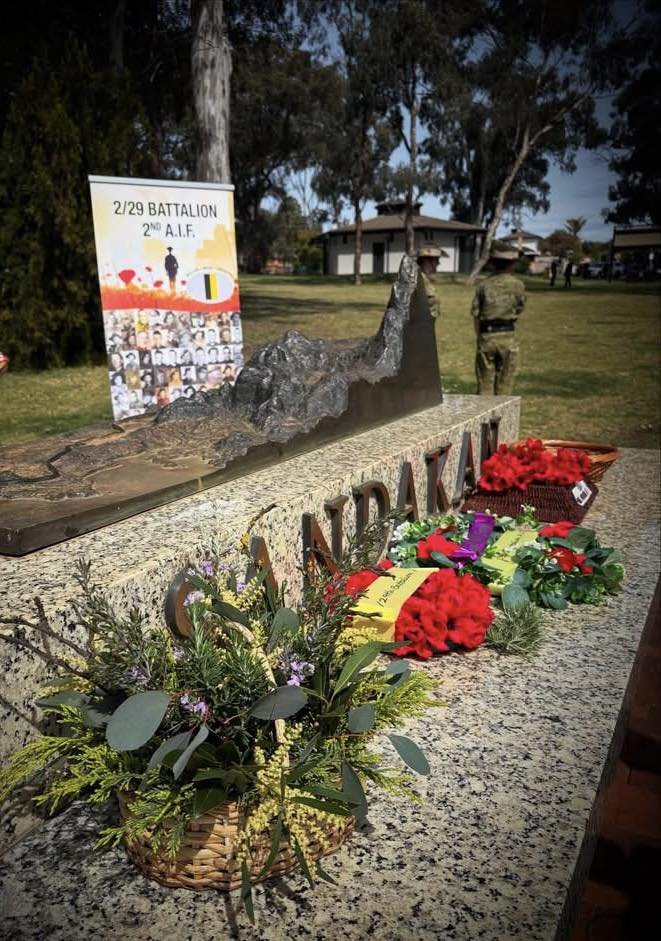
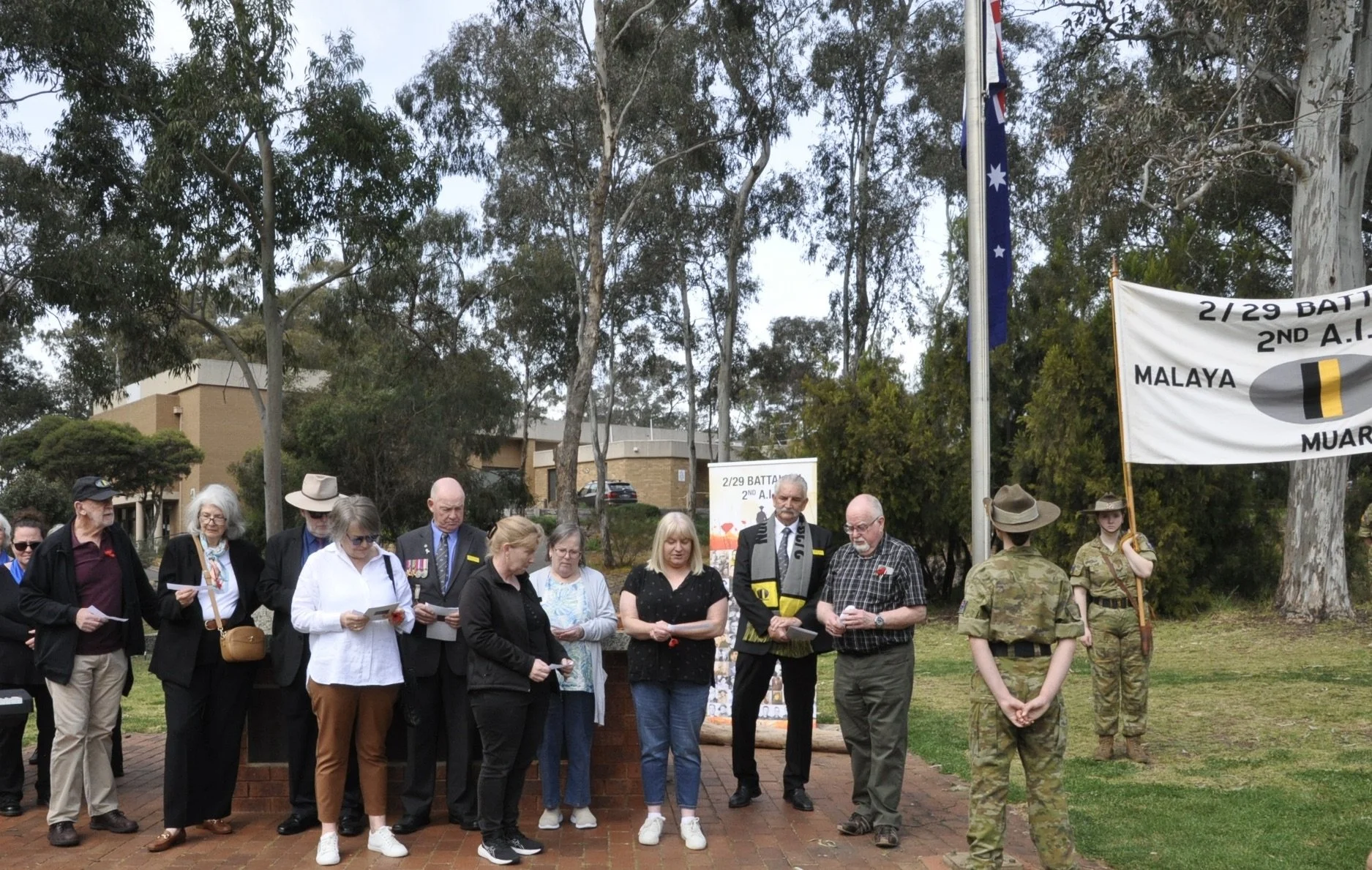
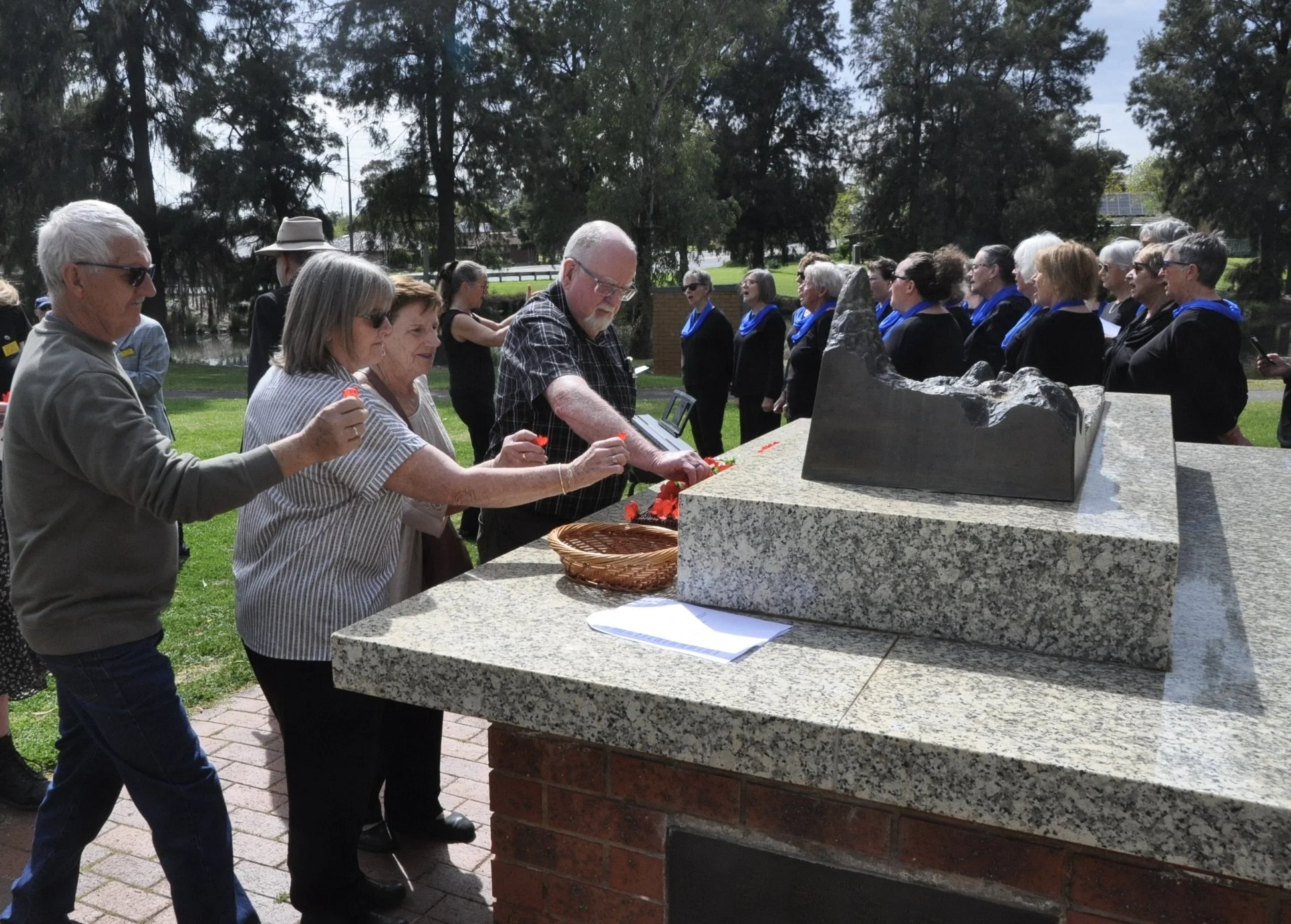
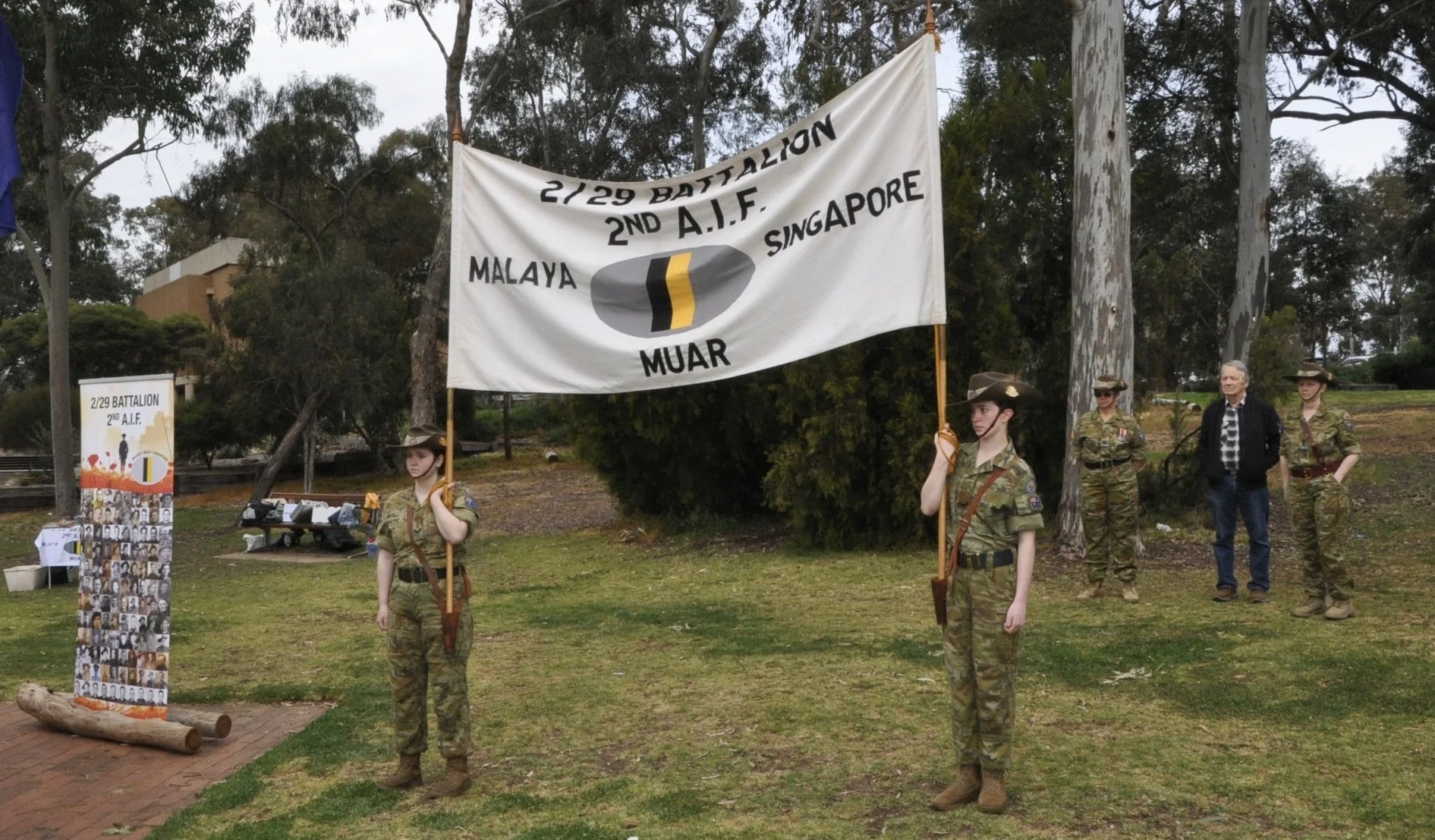
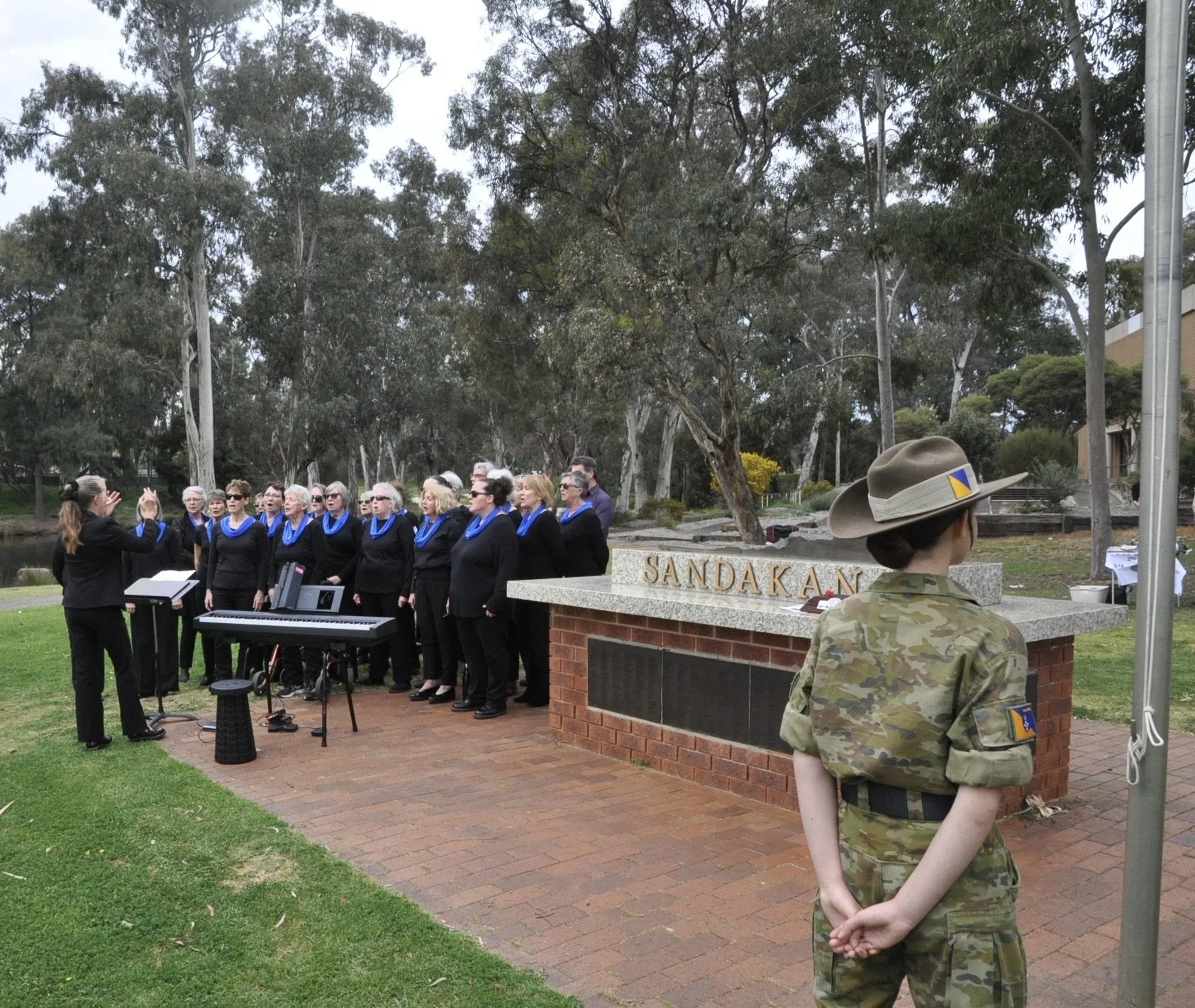
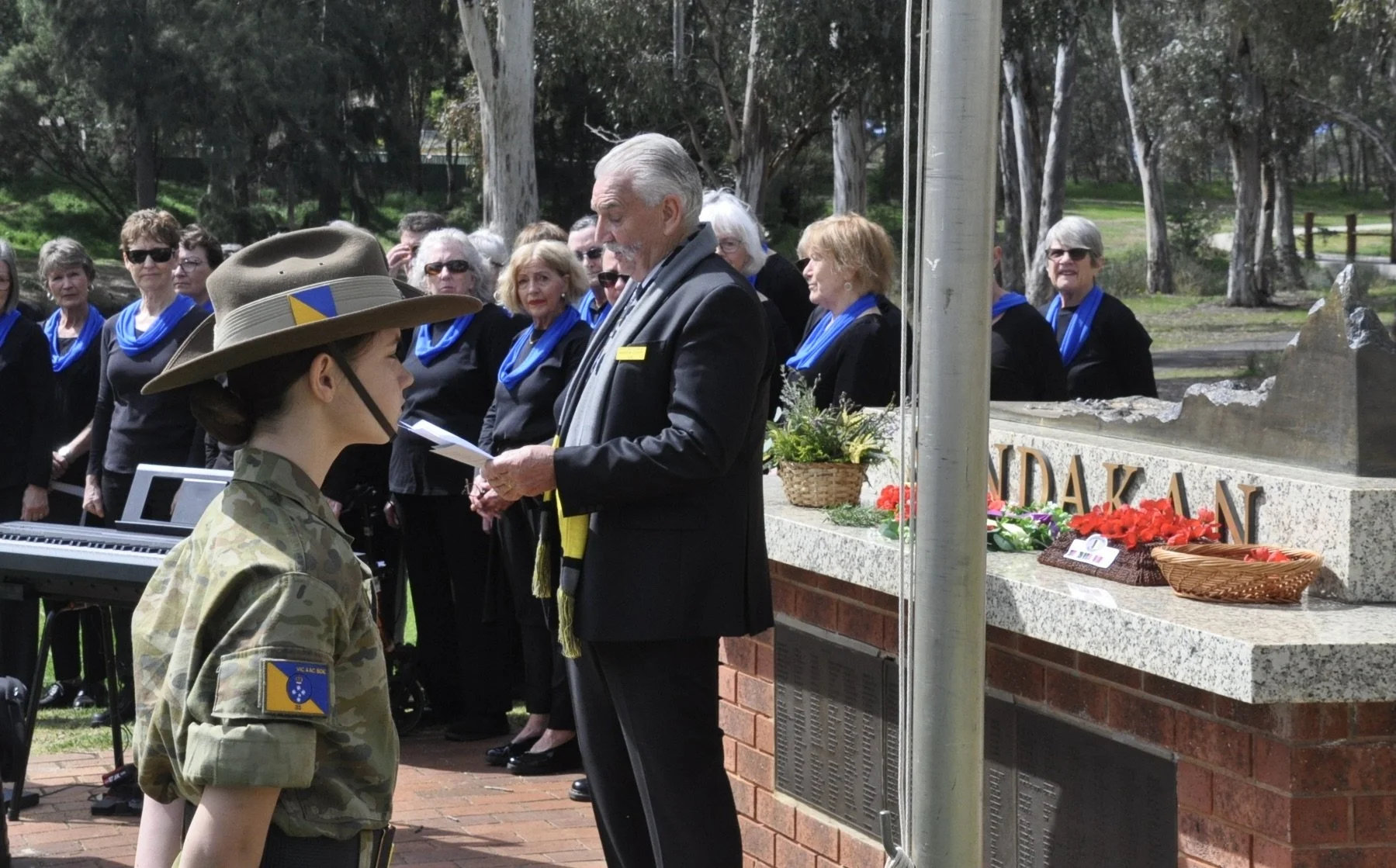
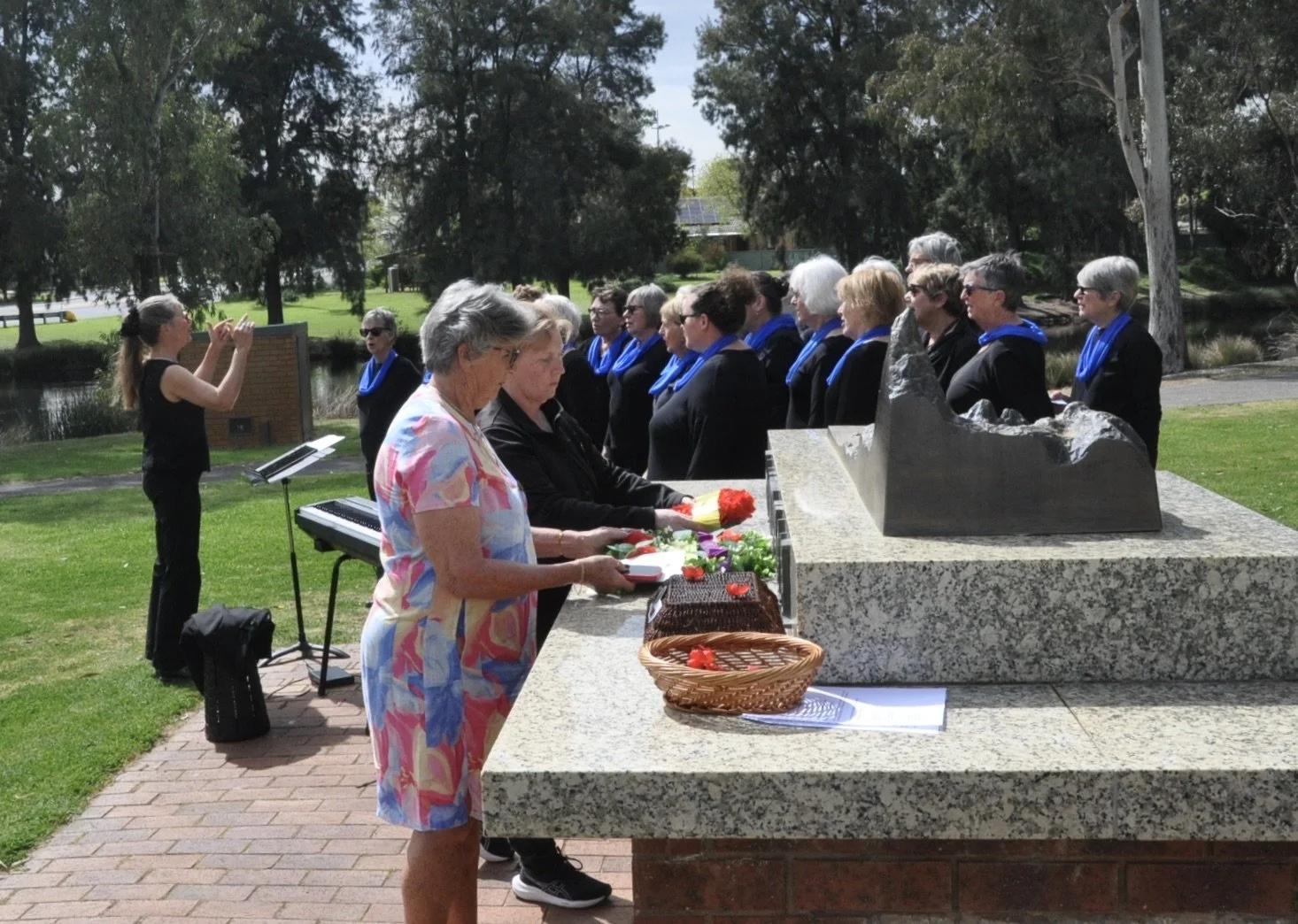
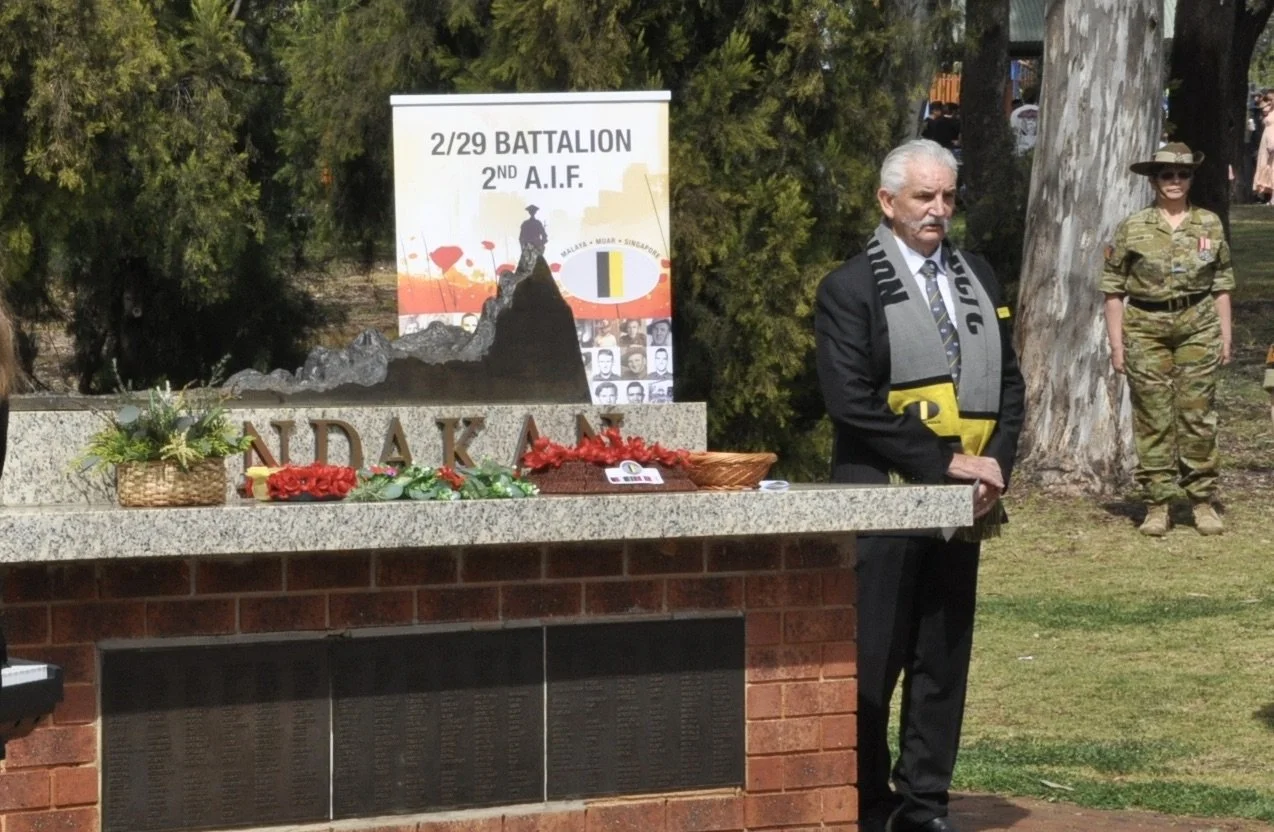
On Sunday, 5 October, the 2/29th Battalion Association held a memorial service to honour the men of the 2/29th Battalion at the Sandakan Memorial located on McIvor Highway Strathdale (Bendigo).
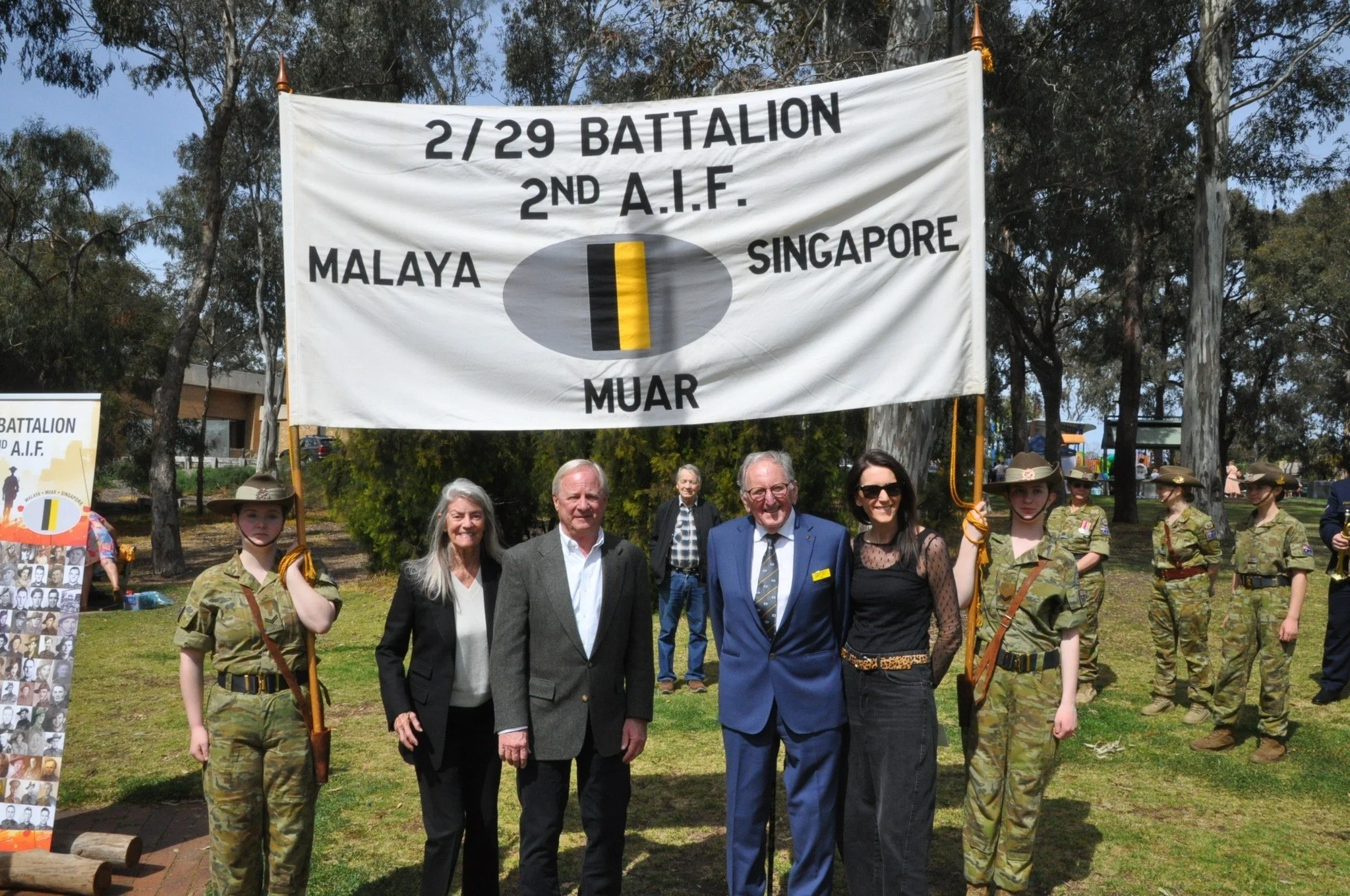
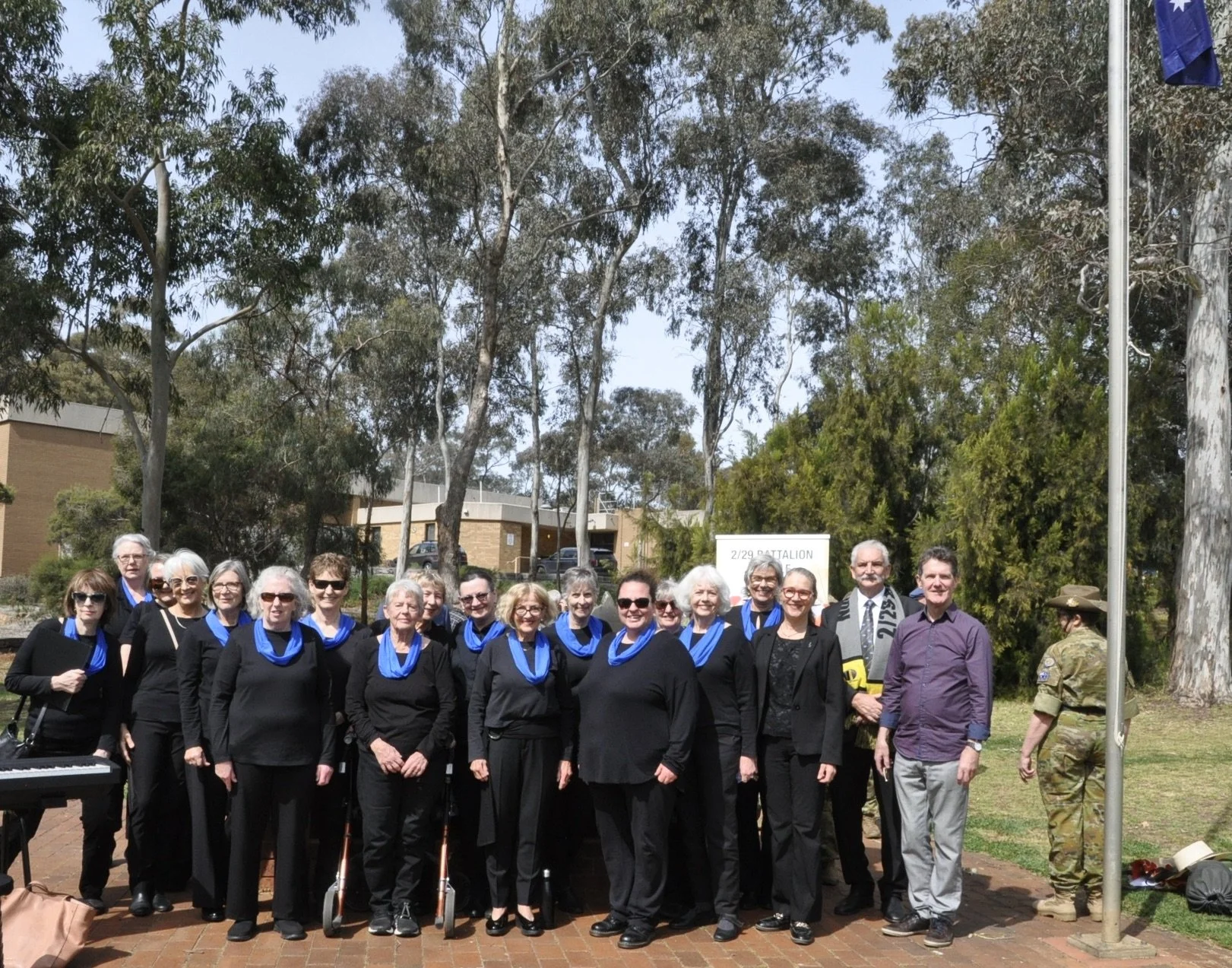
We had an overwhelming response to our invitation with well over 60 families and friends attending the service.
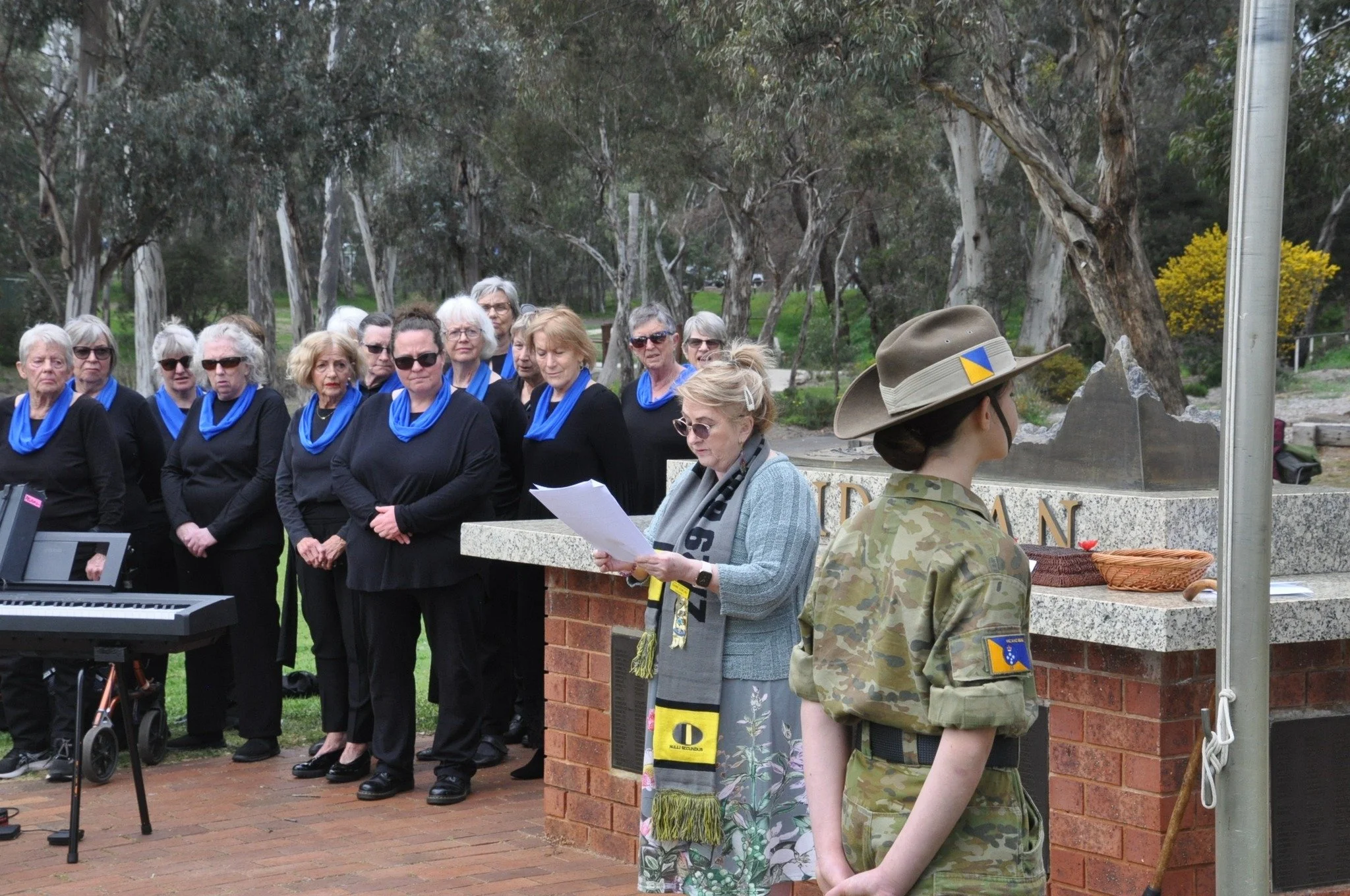
Andrew Coffey introduced the service:
There are some here this morning who do not know the history of the 2/29th Battalion.
The Battalion was formed in Victoria in 1940 The men were transported to Singapore & Malaya and went into battle against the Japanese, they eventually became prisoners of war and were held in captivity and many were forced to work on the Thai Burma Railway.
They spent One thousand one hundred and twenty days as Prisoners of War.
We gather here today to remember them, men of the 2/29th Battalion.
Particularly the Boys from the Bush.
Men from Bendigo and surrounds who enlisted.
Men who stood tall to defend our shores, men who walked away from families, loved ones, jobs, farms, wives and children, to protect our country.
Most of them had only limited educations, some left school at 14 or younger.
Yes they were given training. But they were farmers, butchers, clerks, labourers.
It is because of the men of the 2/29th Battalion and thousands of men and women like them that we gather here this morning.
Some joined up for a better life, most joined to make a difference and it was “The Right Thing to Do”.
Their actions must never be forgotten.
Some of them too young to have ever experienced marriage or children.
Some were older men who had wives and families that they left behind But still they all went, they went to help and to make a difference.
For many it was the first constant employment that they had. Many had never been out of their home towns or States prior to enlisting.
Most had never travelled anywhere, some had never seen the ocean.
Many lied about their ages, some put their ages up, some that were too old put their ages down.
Those that returned, and those that made the ultimate sacrifice.
Our lives were shaped by them,
We Will Remember Them
I thank you all for your attendance this morning
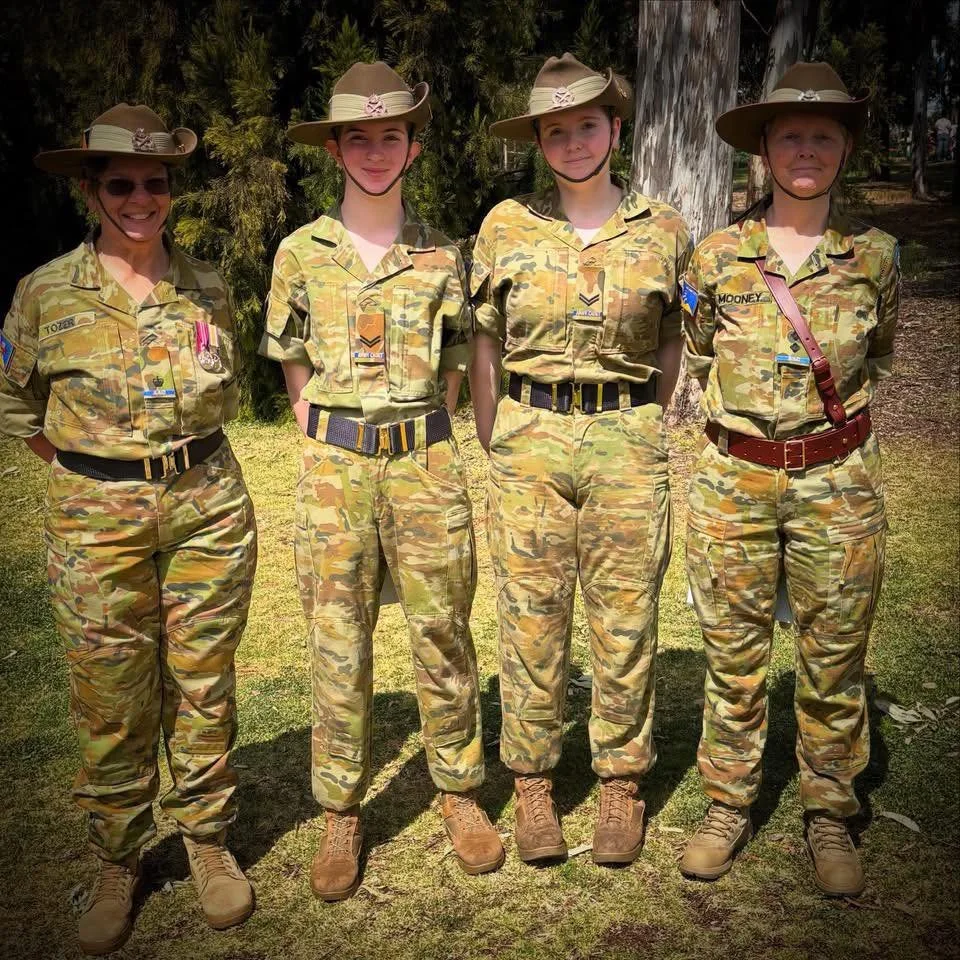
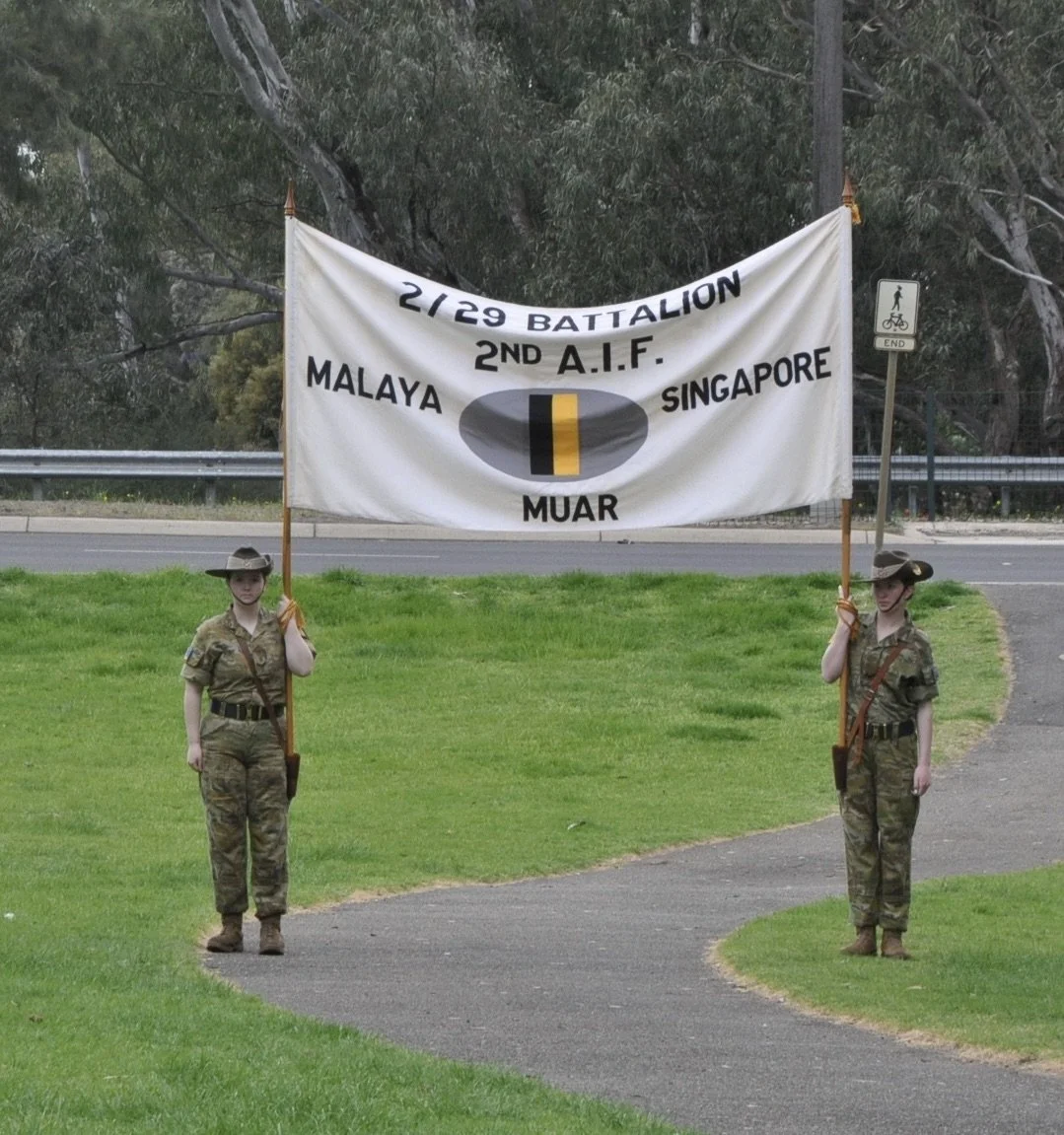
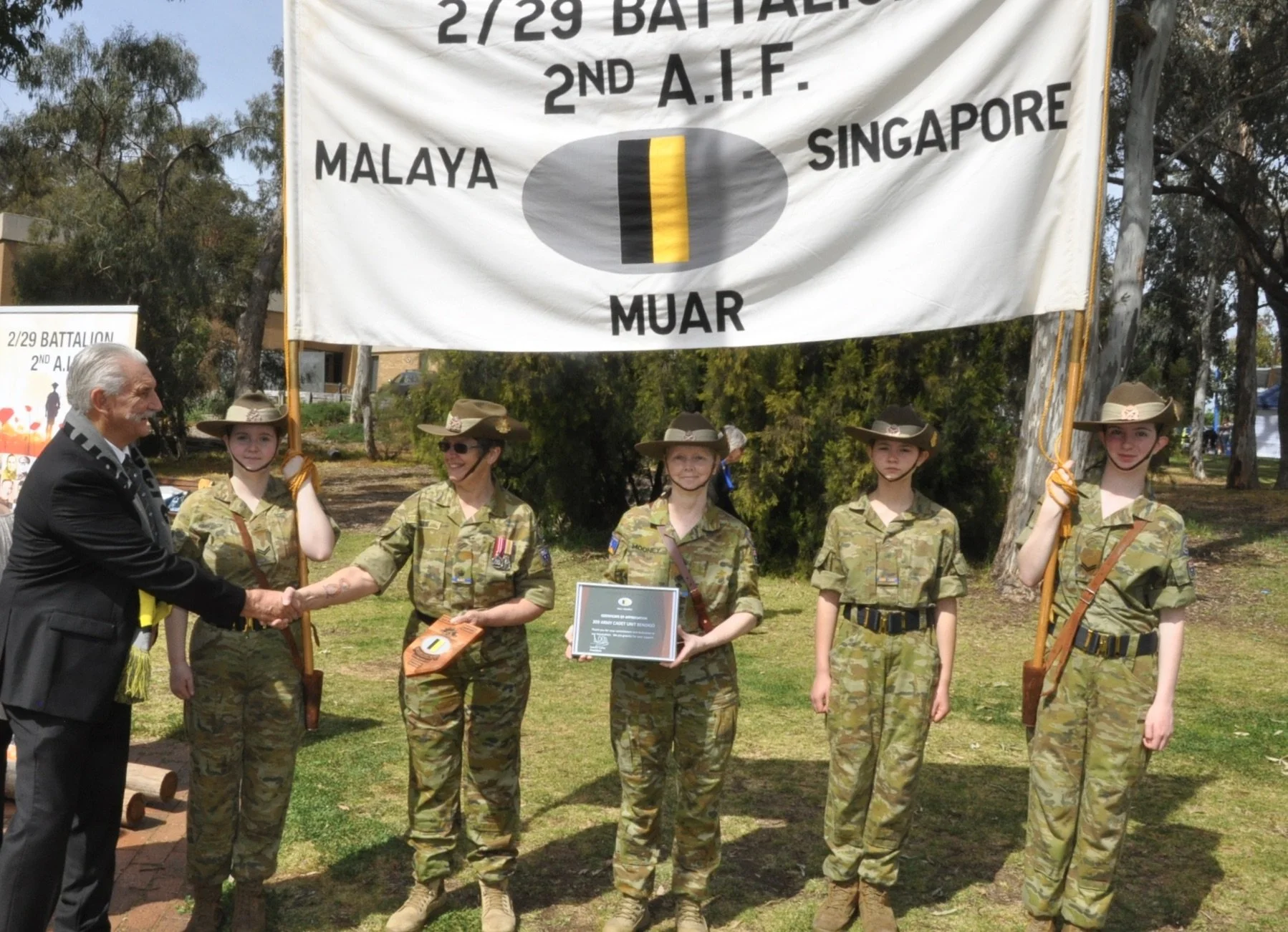
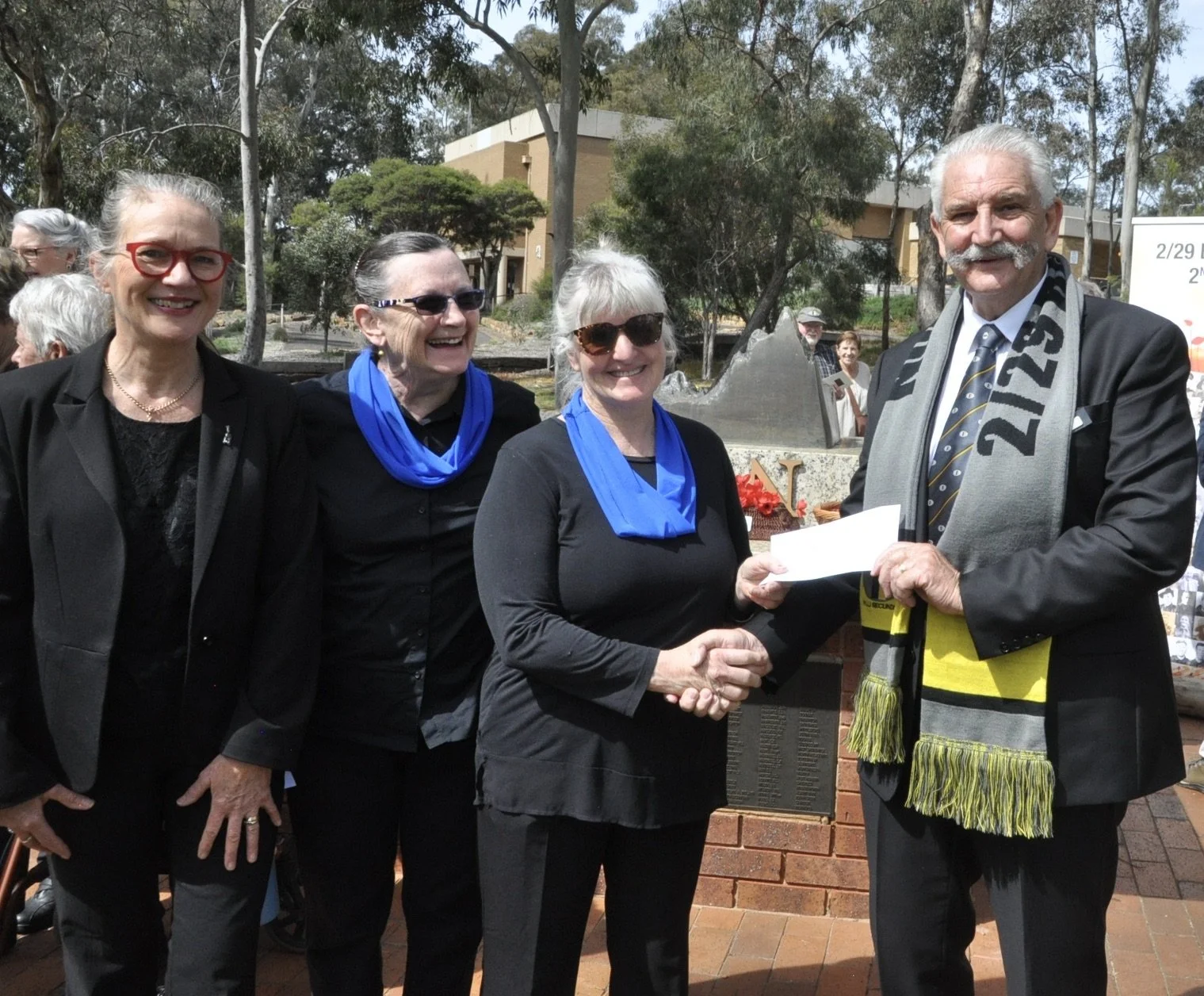
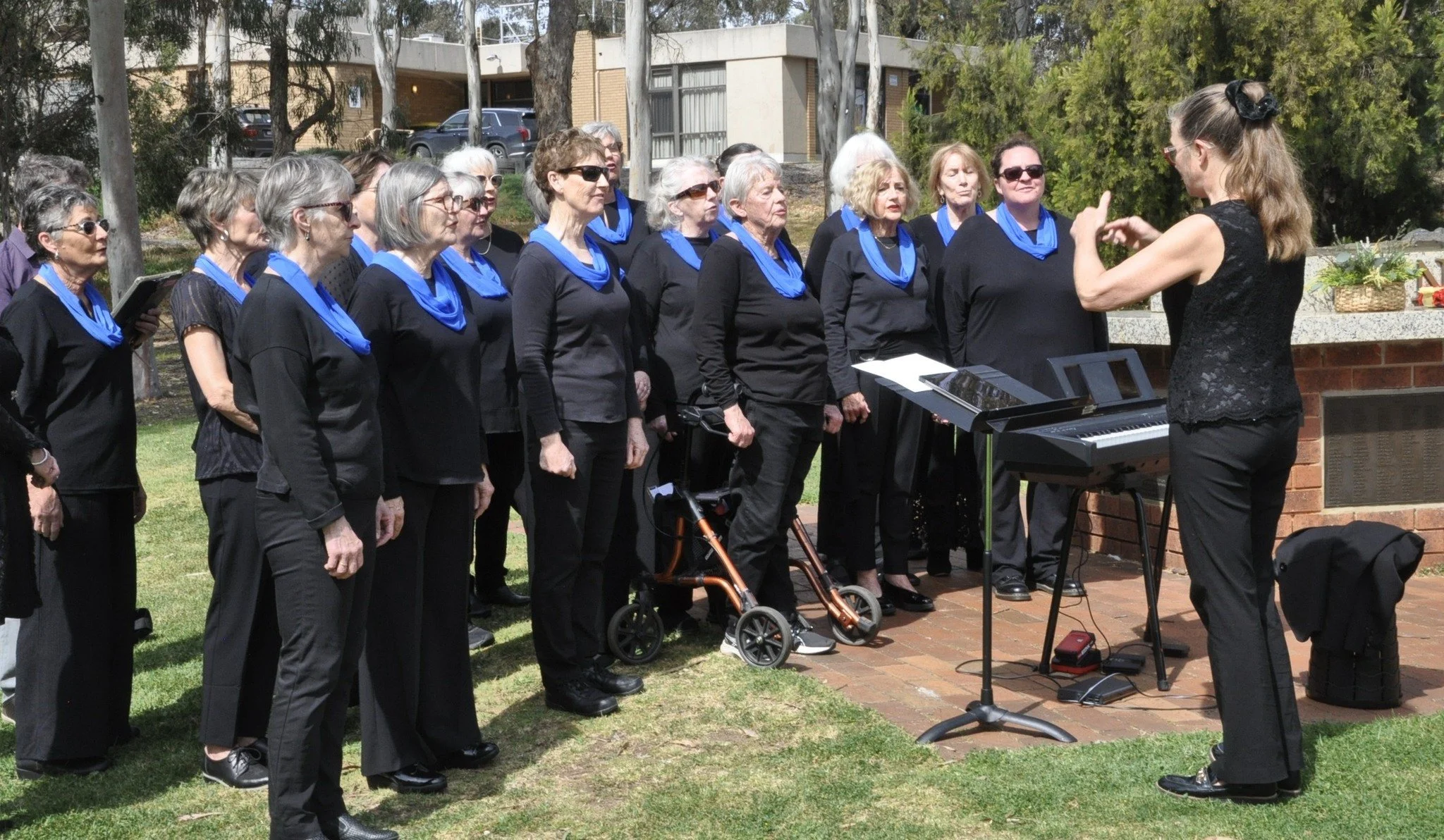
Our sincere thanks to Women of Note Choir, members of the 309 Army Cadet
Unit Bendigo, our bugler, LAC Christopher Grace from the Air Force Band
Dianne Cowling’s address follows.
The Boys from the Bush of the 2/29th
My Dad never said much about his time as a POW of Japan, when I was growing up.
I knew it was awful, but I didn’t really know what he suffered.
For instance, his war buddies seemed more important to him than his family, and I resented this – until after he died, I learnt the truth, so it is to his memory and all that he was that I relay this.
My father, Pte Gordon Cowling, was known to all his 'Brothers in Arms’ as Mouse, not because he liked cheese, as he said, but because he was a scrounger.
A country boy whose father had fought in WWI, and left the impression that going off to war was an adventure.
So, like many others, when WWII broke out, he was eager to embark on his own adventure, lie about his age, and be accepted into the Army.
The boys from the bush volunteered in droves, keen to prove their mettle and fight for the freedoms we enjoy today.
The training was hard, but soon they were off by ship to sail across the waters to the Middle East to fight the enemy on the other side of the world, only to find once out in the ocean, they were to change direction and head to Singapore Island to fight the new enemy, the Japanese.
The ship carrying the 2/29th, part of the 8th Division, arrived in Singapore in August ’41, where, due to the foresight of Maj. Col Bennet, they were put to work immediately, training hard in the jungles of Malaysia.
On December 8, 1941, under the command of General Yamashita, the entire Japanese Southern Army landed in northern Malaysia, marking the beginning of the War with Japan.
Intel was poor; the true strength of the enemy, the allies were soon to face, was unknown.
The 2/29th were selected to quell ‘a small skirmish’ in Muar Province. The troops were told they would meet about 200 short, ape-like men on bicycles, wearing thick glasses, poorly trained and sharing one old rifle between two; so only 600 of the 2/29th were sent to rout the enemy.
On 18th January ’42, at the Battle of Bakri, not only saw their beloved Commander in Chief, Col. Robertson, killed, but they faced fifteen thousand of the battle-hardened Emperor’s Elite Guard, six feet tall, well equipped, and accompanied by two tank divisions.
Again, because of Bennet’s foresight, our boys were supported by 2/4th Anti-tank guns that destroyed both tank divisions, and together were the first allies to stop the Japanese advance.
A temporary reprieve but their heroic effort was noted by General Yamashita, who later commented, ‘he had never met fighting men like them’. Yamashita had a commemorative board erected on site, which is still there today.
The ‘Trial by Fire saw heroic fighting trying to win insurmountable odds surrounded by thousands of enemy, advancing through the jungle trails, cutting them off from reinforcements of Col Anderson’s 2/19th.
The position eventually so untenable that Col Anderson finally ordered ‘it’s everyman for themselves’.
The untold story of heroism amongst the 2/29th saw so many perish, but many were taken captive and sent to Padu Prison in Kuala Lumpur, many did make it back to Singapore, but a small
group even made it all the way back to Australia, unaware of the surrender on the 15th February ’42 and so initially they were arrested for disobeying orders and thrown in the brig. One such 2/29th hero was a neighbour of ours, Harry Grey.
Headlines back home read ‘The Lost Battalion’ of 2/29th.
One term of the surrender was that the Allied Armies would remain intact, taking orders from their own officers.
Hence, the survivors of the AIF were marched to Selerang Barracks in Changi Provence, the previous home of 800 Gordon Highlanders, now home to 15,000 AIF.
If the men thought the conditions were bad, they were soon to get a lot worse.
The Japanese plan to build a railroad from Thailand to Burma necessitated workers, resulting in forced labour by the POWs. With promises of better conditions ‘more like a recreational camps’ men were sent to slave ‘On the Line’.
Dad went up with 'H' Force in June ’43, as he was too ill to go with F Force, which had left in April. The unimaginable horror of that time saw many die; those who survived returned to Changi Provence as mere skeletons of their former selves.
The residue of AIF was finally transferred to Changi gaol, in Changi Provence, in 1944.
Near the end of the war, my father was in Kranji gaol, established next to the hospital, once they were deemed ‘well enough’, a subjective description given their true condition.
Dad was in Kranji gaol on Liberation Day, 80 years ago on 15th August 1945, when the men woke to find that their Japanese prison guards had all disappeared.
They finally walked free, and some, including my father, made the day’s journey on foot down to Singapore City, where they ‘lived it up’ until their ships arrived to take them ‘home’.
Misunderstood by the Army back home, the men were left to enter civilian life totally unprepared for the battle ahead.
Still suffering with bouts of Malaria, tropical ulcers, and the unknown, then, post-traumatic stress disorder, my father struggled to adapt.
It was their strong ‘mate-ship’ that saw the AIF survive the 1267 days as POWs, and it was this continued strong ‘mate-ship’ that saw my father through the years as his health deteriorated and he continued to struggle with the nightmares.
As a family, I don’t know how we would have survived without the support of his POW mates, the exPOWs of Victoria, Legacy, the Carry on Club, and the RSL.
I never saw my Dad as a hero, but his ‘pommy mate’ in England, Joe Higgins, spoke humbly of my father as one and said ‘without Mouse I would not have made it home’, still treasuring the quoit my father gave him when they parted in 1945.
In our ignorance, we never saw Dad as a hero.
I have since learned that they were all heroes, including my father, with his feet of clay.
Riddled with cancer, he lost the final battle in April ’91. He was just 69.
He did NOT go peacefully in the night – he fought the cancer with the same determination as his time in captivity.
I dedicate this to all the men from the bush who enlisted and fought to make a difference.